
US Defense Chief: No Evidence Iran Moved Uranium After Bunker-Buster Strikes

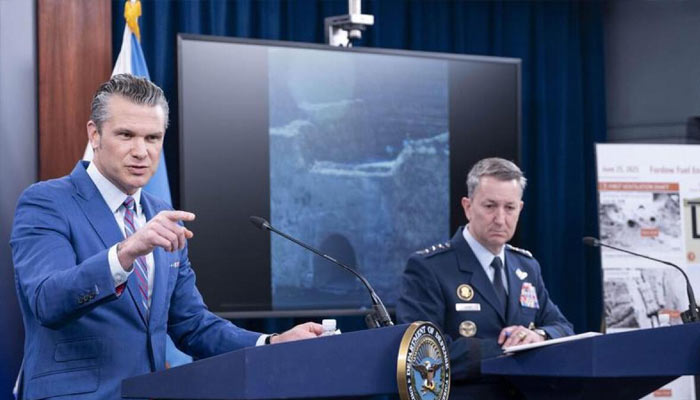
US Denies Iran Moved Uranium Before Strikes, But Experts Disagree.
US Defense Secretary Pete Hegseth said Thursday there is no intelligence to suggest Iran moved its highly enriched uranium before US airstrikes targeted key nuclear sites over the weekend. The strikes, carried out using more than a dozen 30,000-pound bunker-buster bombs, aimed to cripple Iran’s nuclear program by targeting deeply buried facilities.
“I’m not aware of any intelligence that I’ve reviewed that says things were not where they were supposed to be,” Hegseth told reporters at a tense Pentagon briefing. His comments came amid growing debate over the true impact of the operation, which President Donald Trump described as decisive.
Trump, speaking on his social media platform, backed Hegseth and said no uranium was moved. “The cars and small trucks at the site were those of concrete workers trying to cover up the top of the shafts,” he said. “Nothing was taken out.”
However, analysts and independent experts have raised doubts. Satellite imagery from Maxar Technologies showed unusual activity at Fordow—one of the main nuclear sites—just days before the strike. Long lines of vehicles were seen at the entrance, prompting speculation that Iran may have transferred critical nuclear material in anticipation of the attack.
Reuters quoted a senior Iranian source who claimed that much of the 60% enriched uranium stockpile had already been moved to a secret location. European intelligence agencies cited in a Financial Times report also suggested that Iran’s uranium reserves remained largely unaffected, as much of the material had been relocated prior to the bombing.
The Pentagon’s narrative is being challenged following a leaked preliminary assessment by the Defense Intelligence Agency (DIA), which indicated the strikes may have only delayed Iran’s nuclear capabilities by several months. Hegseth dismissed the report as “low confidence” and said it had been overtaken by newer intelligence, citing CIA Director John Ratcliffe, who claimed the damage was significant enough to take Iran years to recover.
General Dan Caine, Chairman of the Joint Chiefs of Staff, also spoke at the briefing, focusing on the technical execution of the bombing. He showed test footage of the bunker busters and described how each wave of bombs precisely hit ventilation shafts at the Fordow site. However, he declined to offer an assessment of the operation’s long-term impact, deferring to intelligence agencies.
Both Hegseth and Caine denied any political pressure to portray the strikes as more successful than they were. Caine stressed the military’s apolitical role, saying, “I’ve never been pressured by the president or the secretary to do anything other than tell them exactly what I’m thinking.”
Meanwhile, the Senate is preparing to vote on a resolution requiring congressional approval for future strikes on Iran—a measure unlikely to pass but reflective of the deepening political divide over US military actions in the region.
Comments are closed.