
Lab-Grown Eggs and Sperm Bring Birth Without Pregnancy Closer to Reality

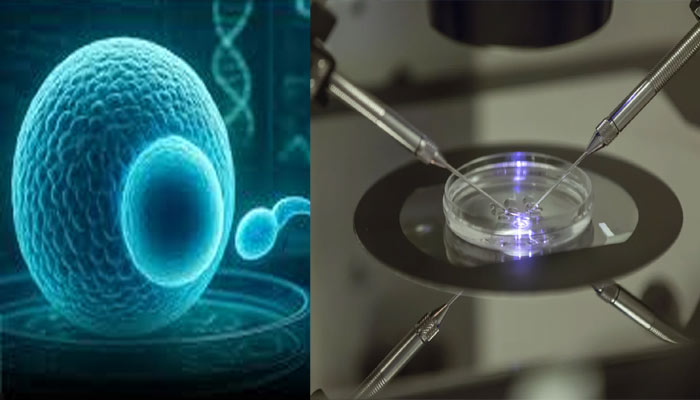
Lab-Grown Eggs and Sperm Could Make Pregnancy Optional Within a Decade.
A radical scientific breakthrough once confined to the realm of science fiction may soon become reality. Researchers around the world are racing to perfect in-vitro gametogenesis (IVG) — a process that creates human eggs and sperm from ordinary cells like skin or blood. The implications could fundamentally reshape how humans reproduce.
At the forefront of this global push is Professor Katsuhiko Hayashi of Osaka University, Japan. In an interview with The Guardian, he suggested that fully functional lab-grown human gametes — eggs and sperm — could be ready for clinical use within seven years.
A Glimpse Into the Future
If successful, IVG could make once-impossible family structures biologically feasible. For example:
A woman could have a child without ever being pregnant
Two men could become biological parents of the same child
A single individual could, in theory, use their own DNA to produce both egg and sperm
Though these scenarios may sound far-fetched, Hayashi’s lab and others are making steady progress toward turning them into reality.
How It Works: Making Life From Skin
IVG starts by reprogramming skin or blood cells into pluripotent stem cells, which are then coaxed into becoming precursors to sperm or eggs. In Hayashi’s lab, researchers have developed tiny organoids that resemble testicles and ovaries. Though just 1 millimeter wide, these mini-organs are already producing early-stage reproductive cells.
Challenges remain: oxygenation, cell maturation, and prevention of genetic abnormalities are major hurdles. But with ovary organoids now beginning to progress toward forming full human eggs, scientists say the breakthrough is edging closer.
The Global Race to Rewrite Reproduction
Japan isn’t alone in this push. In the U.S., Conception Biosciences, a Silicon Valley startup led by Matt Krisiloff, is promising lab-grown fertility options within five years. With significant private investment, the company aims to not only solve infertility but also redefine the meaning of parenthood.
Proof-of-concept experiments in animals are already underway. In one landmark study, researchers created a female mouse from two male parents using IVG techniques — a key milestone toward same-sex biological reproduction in humans.
Ethical and Social Dilemmas Ahead
While IVG could transform lives — enabling older women, same-sex couples, or single individuals to have genetically related children — the technology also raises major ethical concerns:
Should children be created without sexual reproduction?
What are the long-term genetic risks?
How will laws and religious institutions respond?
Some scenarios — such as creating embryos from three or more people’s DNA — add further complexity to debates about identity, consent, and family.
Currently, the practice is banned in the UK, while research continues in countries like Japan and the United States, where regulations are more permissive.
What Lies Ahead
Experts suggest that within the next decade, we may witness the first human birth using lab-created sperm or eggs — a milestone that could fundamentally alter how we define family, fertility, and even reproduction itself.
As Professor Hayashi puts it, “We’re not just treating infertility. We’re entering a new chapter in the story of human life.”
Comments are closed.