

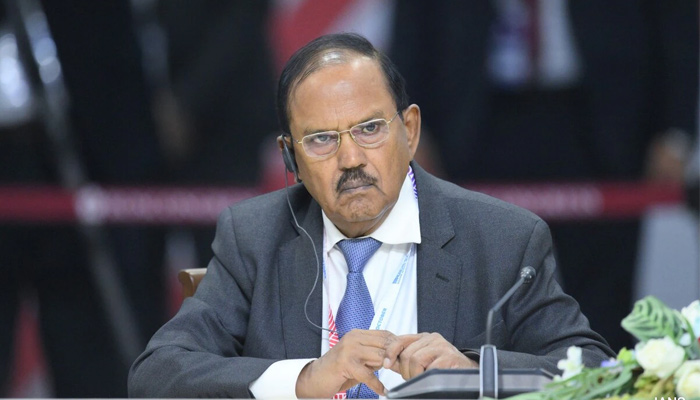
How Ajit Doval Helped Neutralise a ‘Spy Queen’ and Secure Sikkim for India.
National Security Advisor Ajit Doval’s early career is filled with missions that read like spy novels. One of the least-known played out not across the border in Pakistan or China, but in the Himalayan kingdom of Sikkim in the early 1970s.
At the time, Sikkim was ruled by the Chogyal dynasty, with India handling defence and foreign affairs under a protectorate arrangement. But the monarchy came under strain after Chogyal Palden Thondup Namgyal married Hope Cooke, an American who renounced her US citizenship to become queen.
Rise of the ‘Spy Queen’
By the late 1960s, Hope Cooke was no longer a quiet royal consort. She courted foreign journalists, gave interviews portraying Sikkim as a nation resisting Indian pressure, and was seen in Delhi as a “spy queen” suspected of having links with the CIA. Her influence was viewed as dangerously aligned with Washington’s interests—particularly during the 1971 Bangladesh war, when the US openly sided with Pakistan.
For India, the prospect of a buffer state in the Himalayas drifting towards American influence, with China looming in the north, was a strategic nightmare.
Enter Ajit Doval
It was in this fraught atmosphere that a young intelligence officer, Ajit Doval, was dispatched to Sikkim. His mission: to assess local sentiment, counter the queen’s influence, and ensure Sikkim stayed within India’s orbit.
Doval went to ground, embedding himself among locals and quietly cultivating political leaders. His reports revealed widespread resentment against the monarchy—particularly among the majority Nepali population, who saw the palace as elitist, aloof, and anti-India.
Delhi now had confirmation: not only was Sikkim strategically vital, but integration with India was also broadly popular.
Fall of the Monarchy
By 1973, protests against the Chogyal erupted, with demonstrators demanding democracy. Under pressure and increasingly isolated, Hope Cooke left Sikkim for New York, never to return.
Two years later, in 1975, the Sikkim Assembly voted to abolish the monarchy and overwhelmingly supported joining India. A referendum confirmed the decision, with more than 97% backing integration. Delhi moved swiftly, and Sikkim became India’s 22nd state.
Ajit Doval’s quiet groundwork—exposing palace unpopularity and countering the “spy queen’s” influence—had helped lay the foundation for one of independent India’s most significant geopolitical gains.
Comments are closed.