
Mars’ Lost Oceans Explained: Breakthrough Study Finds Missing Link

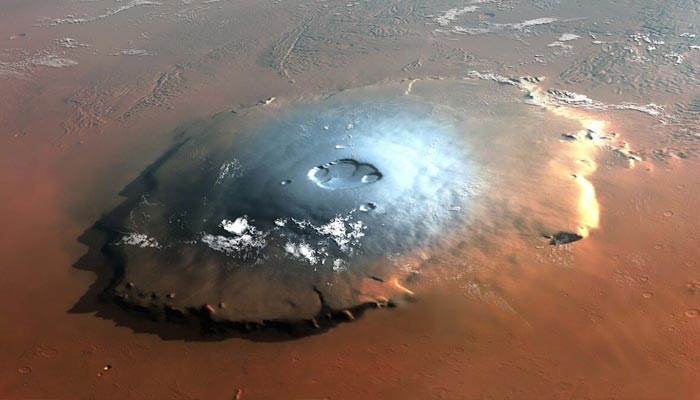
Scientists may have uncovered a crucial new piece in the long-running mystery of how Mars lost its vast reserves of water.
Today, the Red Planet is a frozen desert. Yet its surface is carved with ancient river valleys, lakebeds and mineral deposits that point to a wetter past. For decades, researchers have debated how Mars transformed from a world that once supported flowing water into the dry, barren landscape seen now.
A new international study published in Communications Earth & Environment suggests that powerful regional dust storms may have played a far greater role in that transformation than previously thought.
The research team — including scientists from the Instituto de Astrofísica de Andalucía, the University of Tokyo, and Tohoku University — analyzed atmospheric data from the Northern Hemisphere summer of 2022–23. During that period, an intense but localized dust storm lifted unusually large amounts of water vapor high into the Martian atmosphere.
Until now, scientists believed this season had only a limited impact on long-term water loss. Most attention had focused on massive, planet-wide dust storms or the warmer Southern Hemisphere summer, when solar heating is stronger.
However, during this regional storm, water vapor concentrations in the middle atmosphere surged to nearly 10 times their normal levels. Soon after, hydrogen levels near the upper atmosphere increased to roughly 2.5 times typical values.
This spike is significant because when water molecules are broken apart by sunlight, hydrogen — the lightest element — can escape into space. Once hydrogen drifts away, the water it came from is permanently lost.
The findings suggest that even relatively short-lived and localized dust storms can accelerate this escape process, gradually draining the planet of its water over millions of years.
By highlighting the role of regional storms, the study adds an important new dimension to scientists’ understanding of how Mars slowly evolved into the cold, arid world we see today.
Comments are closed.