

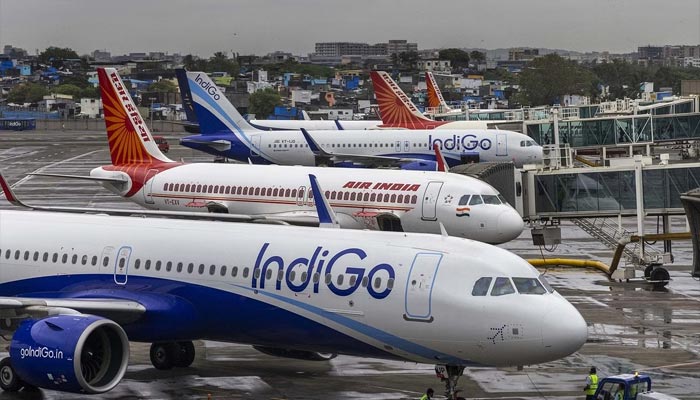
IndiGo, India’s largest airline, has urged the government to reduce fuel taxes and, along with rival.
Air India, is pushing New Delhi to ask private airports to cut certain charges, according to three sources familiar with the discussions. The request comes as escalating tensions in the Middle East increase operational costs for Indian carriers.
Both airlines are facing mounting pressure as the ongoing conflict involving Iran has disrupted key air corridors in the region. At the same time, Indian airlines remain barred from using Pakistan’s airspace due to strained diplomatic relations between India and Islamabad.
The twin restrictions have forced airlines to take longer routes on several international sectors, significantly increasing fuel consumption and operating costs. IndiGo has rerouted some flights to the United Kingdom via Africa, while Air India has added refuelling stops on certain services to North America.
According to the sources, the two carriers have approached the government seeking financial relief, particularly through changes in aviation-related taxes and airport charges.
IndiGo has specifically sought relief on aviation turbine fuel (ATF), which accounts for about 30–40% of an airline’s operating costs. ATF currently attracts a federal tax of around 11%, along with additional state levies that can reach as high as 29%, two of the sources said.
Neither IndiGo nor Air India responded to requests for comment, and India’s civil aviation ministry also did not immediately respond.
As of January, IndiGo held a domestic market share of 63.6%, while the Air India Group accounted for 26.5%.
Rising Financial Pressure
The airlines have also sought rationalisation of certain charges at privately operated airports. According to the sources, the carriers argue that some passenger-related fees at private airports are higher than those at state-run facilities and should be reduced.
Data from aviation analytics firm Cirium shows that Indian airlines did not operate 64% of their 1,230 scheduled flights to the Middle East, Europe and North America between February 28 — when the US and Israel launched military operations against Iran — and March 9.
Analysts say the situation could significantly affect airline finances. Last week, HSBC warned that the ongoing Middle East crisis could place a “significant burden” on the costs and profitability of Indian carriers.
Air India has also asked the government to reduce the local tax on premium economy tickets to 5%, down from the current 18%, one source said.
The airline, owned by the Tata Group and Singapore Airlines, has previously estimated that the Pakistan airspace ban imposed in April 2025 could cost it about $600 million annually. Air India, which was privatised in 2022, reported a loss of $433 million last year.
Comments are closed.