
Sri Lankan MP Namal Rajapaksa Calls US Strike on IRIS Dena ‘Unethical’, Says Legality ‘Debatable’

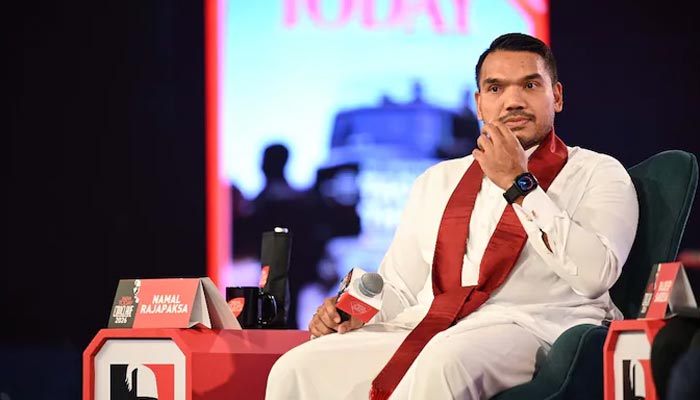
Following the sinking of the Iranian warship IRIS Dena by a US submarine in the Indian Ocean near Sri Lanka.
Which reportedly killed at least 87 people, Sri Lankan MP Namal Rajapaksa described the attack as unethical and said its legality could be questioned. Speaking at the India Today Conclave 2026 in New Delhi on Saturday, Rajapaksa said the incident raises serious concerns about international law, maritime norms and the conduct of major powers in the Indian Ocean region.
“The legality of it can certainly be debated,” Rajapaksa said, adding that legal experts and academics may dispute whether the strike violated international law. However, he questioned whether the global standards of legality and humanitarian principles are being applied consistently in contemporary conflicts.
“Academics can debate the legality of it. But the moral values, the ethics and the practices that have governed the Indian Ocean are clearly being broken,” he said, calling for a wider regional discussion on the issue.
The remarks came after a US submarine struck the Iranian vessel on March 4. US Defence Secretary Pete Hegseth later confirmed that an American submarine had carried out the attack on IRIS Dena near Sri Lanka’s southern coast, marking a major escalation in naval operations in the region.
The incident has drawn international attention, with several observers questioning the legality of US military action so close to India and along a vital global shipping corridor.
Rajapaksa — the eldest son of former Sri Lankan president and prime minister Mahinda Rajapaksa — said the episode also highlights broader concerns about how major powers conduct military operations in the Indian Ocean.
“Beyond the legal debate, there are moral values and ethics involved, and the established practices of the Indian Ocean are being broken,” he said.
He urged countries in the region to begin a dialogue on how such incidents should be handled in the future. According to Rajapaksa, recent wars and geopolitical crises have led many nations to question the credibility of the international legal and human rights frameworks that powerful countries have historically championed.
He stressed that nations bordering the Indian Ocean must work together to ensure that decisions affecting regional security are not imposed unilaterally by outside powers.
Referring to past cooperation initiatives, Rajapaksa pointed to efforts by Sri Lanka, India and Maldives to strengthen maritime coordination through discussions on maritime domain awareness — an initiative launched in 2011 to improve monitoring and cooperation across the region.
According to him, those efforts gradually slowed but could regain importance amid rising geopolitical tensions.
“India has a major role to play as a great power in the region and as a country with the capacity to lead,” Rajapaksa said, emphasising that stronger cooperation among regional nations is essential to maintaining stability in the Indian Ocean.
Comments are closed.