
Trump’s ‘massive blow up’ warning on Iran gas field; Gulf oil sites targeted

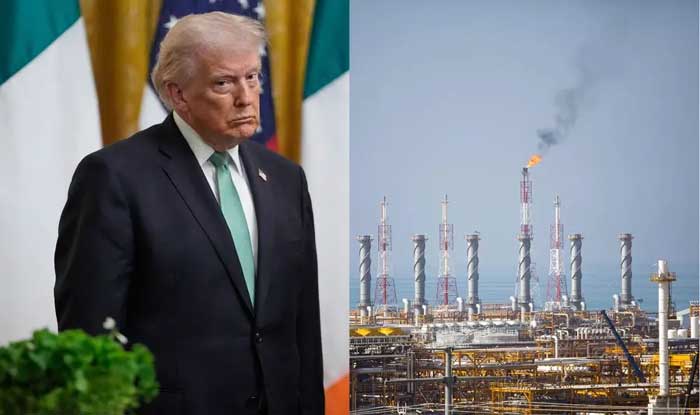
Iran intensified its offensive on Friday, with air raid sirens reported across parts of West Asia, including Bahrain and Israel, as the conflict entered its 21st day.
Tehran escalated the situation by targeting oil and gas facilities around the Gulf a day earlier, in retaliation for an Israeli strike on a key Iranian gas field—raising fears of a broader regional and economic fallout. Strikes continued across multiple fronts even as diplomatic efforts to contain the violence intensified.
Benjamin Netanyahu said late Thursday that, at the request of Donald Trump, Israel would hold off on further attacks on the offshore gas field.
Oil prices fluctuate amid uncertainty
Oil prices slipped after hitting their highest levels since mid-2022, as Washington and Tel Aviv sought to reassure markets shaken by damage to critical energy infrastructure in the Gulf.
Brent crude dropped to around $106 per barrel, while US benchmark West Texas Intermediate hovered near $94.
However, officials in Saudi Arabia warned that prices could surge beyond $180 a barrel if disruptions persist through April. Since the war began, Brent crude—the global benchmark—has already jumped by more than 60%.
Trump issues stark warning
Trump warned that the United States would “massively blow up the entirety” of Iran’s gas infrastructure if attacks on neighbouring countries continue.
Netanyahu, meanwhile, said Iran must be prevented from enriching uranium or developing ballistic missiles, as Israeli air defence systems responded to fresh incoming missile alerts, with sirens sounding from Haifa to the Sea of Galilee.
Elsewhere, violence has also intensified in Lebanon, where the death toll from Israeli strikes has crossed 1,000 amid renewed fighting with Hezbollah, underscoring the widening scope of the conflict.
Comments are closed.