

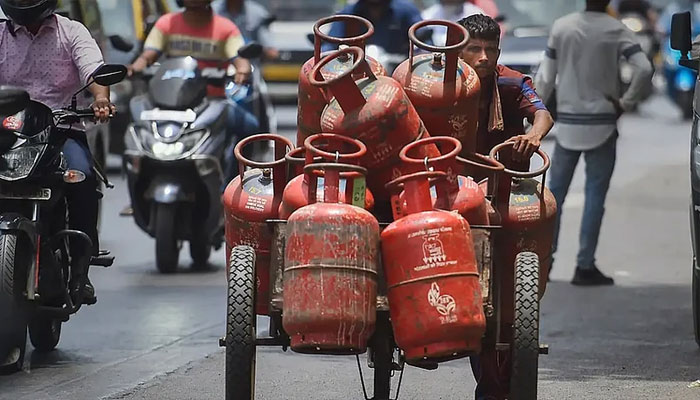
LPG Supply Concerns Rise Amid West Asia Conflict; Govt Dismisses Underweight Cylinder Claims
Amid the ongoing tensions in West Asia and concerns over cooking gas availability, discussions have emerged around possible measures to manage LPG supply across India.
Reports suggesting that oil marketing companies (OMCs) may distribute underweight cylinders—delivering 10 kg of gas in standard 14.2 kg domestic cylinders—have been dismissed by the government as “highly speculative.”
Officials from the Ministry of Petroleum and Natural Gas said no such move has been approved. Joint Secretary Sujata Sharma urged consumers not to believe rumours, stressing that supply remains stable and booking levels have eased to around 50 lakh refills.
However, industry sources indicated that a proposal exploring such options has been submitted for consideration, though any decision would rest with the government.
Supply Pressures Persist
The conflict in the region has disrupted shipping through the Strait of Hormuz, a key route for global oil and gas transport, affecting imports into India.
In response, authorities have prioritised domestic LPG supply, while reportedly scaling back allocations to commercial users.
India relies on imports for nearly 60% of its LPG demand. While domestic refiners have ramped up production—raising the share of locally met demand to 50–60% from about 40% earlier—supply pressures remain.
Recent data indicates a sharp drop in incoming LPG shipments, with no fresh cargoes currently reported en route to Indian ports. Only a limited number of vessels crossed the Strait last week, carrying volumes estimated to meet barely a day’s demand.
Several LPG carriers bound for India are also waiting in the Persian Gulf for clearance, adding to concerns over near-term supply.
No Immediate Disruption, Says Govt
Despite the challenges, officials maintain that there is no immediate disruption in household LPG availability. The government continues to monitor the situation closely, even as uncertainties in global energy supply chains persist.
Comments are closed.