

Tamil Nadu has long resisted the gravitational pull of national politics. It buried the Congress.
At its peak in 1967 and, despite the rise of Narendra Modi, the Bharatiya Janata Party continues to struggle for relevance in the state. Electoral setbacks in 2019, 2021 and 2024 underline a familiar truth: Tamil Nadu remains a citadel of regional assertion in an increasingly nationalised political landscape.
What explains this exceptionalism? Is it a deeply rooted linguistic and cultural identity tied to the idea of Tamilakam? Or is it the product of decades of Dravidian political messaging that frames national parties as outsiders? As the 2026 electoral cycle approaches, these questions demand exploration—not to predict outcomes, but to understand why Tamil Nadu continues to defy national trends.
This series attempts exactly that—examining history, culture, politics and personality to decode the state’s unique political grammar.
Power Without Office
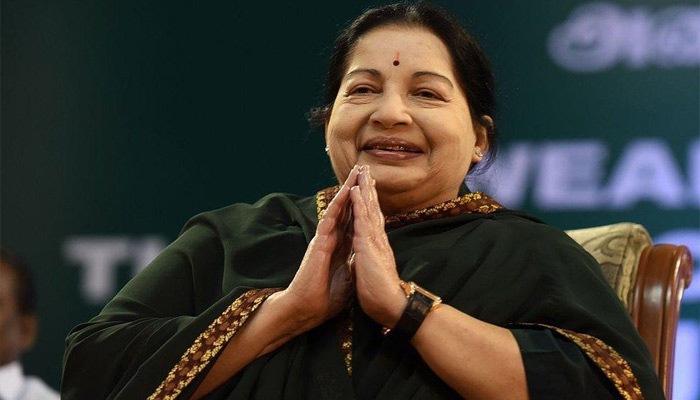
In May 2001, Tamil Nadu entered one of the most unusual phases in its political history. J. Jayalalithaa took oath as chief minister despite being disqualified from contesting elections. It was a moment that blurred the line between legality and legitimacy.
The mandate was emphatic. Jayalalithaa interpreted it as personal endorsement—one that, in her view, outweighed procedural disqualification. Governor Fathima Beevi formalised that interpretation, triggering a constitutional confrontation.
From the outset, Jayalalithaa governed not defensively, but assertively. This was not a return marked by caution—it was a declaration of authority.
The Midnight Arrest
Weeks later, that authority revealed its sharpest edge.
On June 30, 2001, former chief minister M. Karunanidhi was arrested in a pre-dawn police operation that quickly turned into a national spectacle. The visuals—an elderly leader being physically dragged from his home—reshaped the political narrative overnight.
What may have been intended as legal action in a corruption case instead appeared as political vendetta. The fallout was immediate. Sympathy flowed toward Karunanidhi, while Jayalalithaa’s government faced accusations of excess.
The controversy widened when Union ministers Murasoli Maran and T. R. Baalu were also manhandled during the episode. What began in Chennai quickly escalated into a national political crisis.
State vs Media
Jayalalithaa’s uneasy relationship with the media hardened further during this period. Critical coverage was met with pressure—through defamation cases, advertising controls, and even privilege motions.
Journalists protesting arrests in Chennai were detained en masse. During the Karunanidhi arrest, media access was tightly controlled. Later, in 2003, police action against a leading newspaper’s office underscored the government’s intolerance for dissent.
The press was not silenced, but it was unmistakably warned.
Severity as Strategy
Jayalalithaa’s approach to governance was defined by decisiveness—often to the point of severity.
In 2002, she ordered the arrest of Vaiko under anti-terror laws for his pro-LTTE remarks. The move signalled a hardline stance on militancy, but also sparked debate over political overreach.
At the national level, the National Democratic Alliance government led by Atal Bihari Vajpayee grew increasingly uneasy with developments in Tamil Nadu. Tensions escalated, and Governor Beevi eventually stepped down amid mounting criticism.
Law Pushes Back
In September 2001, the Supreme Court of India invalidated Jayalalithaa’s appointment as chief minister, ruling that a disqualified individual could not hold office.
It was a rare moment where constitutional authority directly curtailed political power.
Yet Jayalalithaa’s influence remained intact. Loyalist O. Panneerselvam took over as a placeholder, while real authority continued to flow from her residence in Poes Garden.
The Return
Legal relief soon followed. After her disqualification was overturned, Jayalalithaa contested and won the Andipatti by-election in 2002, returning as chief minister—this time without constitutional dispute.
The comeback reinforced her dominance. Setback had merely been a pause.
Rule by Command
Her second innings was marked by uncompromising governance.
The most dramatic example came in 2003, when her government dismissed thousands of striking state employees. The move shocked the political establishment but drew mixed public reaction—criticism from unions, but quiet approval from citizens frustrated with bureaucratic inertia.
Her administration also introduced controversial measures, including anti-conversion legislation, reflecting a shift from traditional Dravidian ideological frameworks toward a more centralised, authority-driven model.
Opposition Regroups
While Jayalalithaa dominated the political stage, the DMK recalibrated. Karunanidhi, recovering from electoral defeat, leveraged the sympathy generated by his arrest and allowed anti-incumbency sentiment to build gradually.
The party chose patience over confrontation, waiting for Jayalalithaa’s assertiveness to generate its own backlash.
Shifting Equations
At the national level, the DMK remained aligned with the NDA, though the relationship grew increasingly strained.
The death of Murasoli Maran in 2003 marked a turning point. A key bridge between Chennai and Delhi, his absence weakened the party’s influence in national coalition politics.
Even as Prime Minister Vajpayee paid tribute, underlying political equations were already beginning to shift.
The Paradox Endures
By the early 2000s, Jayalalithaa remained the central force in Tamil Nadu politics—dominant, polarising, and impossible to ignore. She governed with authority, often crossed lines, yet retained a firm grip on the state’s political imagination.
But beneath the surface, currents were changing. The opposition was regrouping, alliances were evolving, and public sentiment was quietly shifting.
In Tamil Nadu, even the most commanding personality cannot permanently command the direction of politics.
Comments are closed.