
Low-Cost, Stealthy and Precise: Hezbollah’s New Weapon Raises Concerns for Israel

Nearly two years after a series of coordinated explosions involving communication devices rocked Lebanon.
The conflict between Hezbollah and Israel has entered a new phase — one defined by evolving drone warfare.
A New Kind of Drone Threat
Hezbollah is increasingly deploying fibre-optic quadcopter drones — compact, lightweight devices capable of carrying explosives with high precision. What sets them apart is their method of control. Unlike conventional drones that rely on radio frequencies, these systems are guided through a physical fibre-optic cable linking the drone directly to its operator.
This eliminates the need for wireless signals, making them extremely difficult to detect or disrupt using traditional electronic warfare tools. According to Yehoshua Kalisky of the Institute for National Security Studies, such drones are effectively immune to jamming and leave no electronic footprint that could reveal the operator’s position.
Lethal Efficiency on the Battlefield
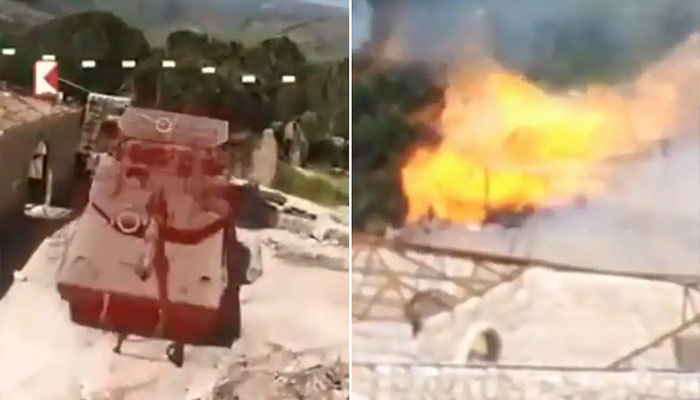
The capabilities of these drones were highlighted in a recent attack claimed by Hezbollah. The group released footage showing a drone strike on Israeli soldiers, who appeared unaware of the incoming threat. The Israel Defense Forces later confirmed that a 19-year-old soldier was killed and others were injured in the incident.
The fibre-optic cable controlling the drone can extend up to 15 kilometres, allowing operators to remain far from the target while maintaining real-time visual control. The cable itself is extremely thin, making it nearly impossible to detect in operational conditions.
Borrowed Tactics, Adapted Strategy
The use of fibre-optic drones has precedent in the war in Ukraine, where similar systems were deployed to bypass electronic countermeasures. The technology has since been adapted and refined, with reports suggesting that base drone units may be sourced from countries like Iran or China before being modified for combat use.
Given the close proximity between Israeli forces and Hezbollah positions in southern Lebanon, these drones are particularly effective in targeting troops within relatively short ranges.
Defensive Challenges
Israel has begun experimenting with physical countermeasures, including nets and barriers, to intercept incoming drones — a tactic also seen in Ukraine. However, officials acknowledge that these solutions are not entirely reliable.
As drone technology continues to evolve, the emergence of fibre-optic systems presents a new challenge for modern militaries. The absence of electronic signals, combined with low cost and high precision, makes them a potent addition to asymmetric warfare strategies.
The situation underscores a broader shift in modern conflict, where relatively simple innovations can significantly alter battlefield dynamics — forcing even technologically advanced militaries to rapidly adapt.
Comments are closed.