
The Four-Day Diplomatic Frenzy Behind the Surprise Israel-Lebanon Agreement

Inside the Four-Day Diplomatic Sprint That Produced the Surprise Israel-Lebanon Deal
What began as a chaotic round of negotiations that one senior US official reportedly described as “a train wreck” ended just four days later with what American officials are calling the most significant political understanding between Israel and Lebanon in more than four decades.
According to an Axios report, the breakthrough was far from inevitable. The opening day of talks was marked by sharp disagreements, repeated breakdowns in communication and fears that the negotiations would collapse before meaningful progress could be made.
US officials said the Israeli delegation arrived with a detailed strategy and a clear list of demands, while the Lebanese side appeared unprepared for the pace and intensity of the negotiations.
“The Lebanese were on their heels,” one US official told Axios, describing a delegation that struggled to respond as Israel pressed its advantage.
Washington Takes Control
As the talks stalled, the United States concluded that conventional negotiations were unlikely to produce an agreement.
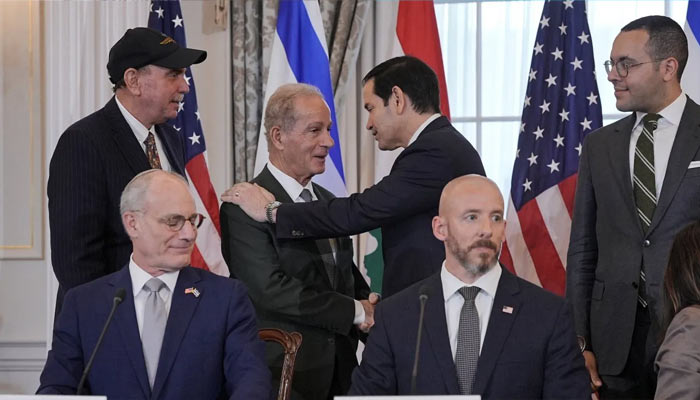
Secretary of State Marco Rubio and his team reportedly assumed a far more active role, shuttling between the two delegations, redrafting proposals and narrowing differences on key issues.
Rather than acting solely as mediators, American officials became the primary architects of the agreement, carrying messages, suggesting compromises and helping both sides craft language that could be defended politically at home.
According to the report, US officials believed their intervention prevented the negotiations from collapsing after the difficult opening day.
A Shared Interest Despite Deep Divisions
Although Israel and Lebanon remain longtime adversaries, officials from both countries reportedly entered the talks with one overlapping objective: reducing Hezbollah’s influence.
For Israel, recent military developments involving Iran and Hezbollah created what officials viewed as an opportunity to further weaken the Iran-backed group.
Lebanon’s leadership, meanwhile, saw a chance to strengthen state institutions after years of economic crisis, political instability and Hezbollah’s growing influence within the country.
While their strategic goals differed, both governments viewed the current regional environment as a rare opportunity that might not remain open for long.
Racing Against Time
According to Axios, US negotiators believed the shifting balance of power in the region created a narrow diplomatic window.
Washington assessed that Lebanon’s government was politically stronger than it had been in years, while Israel believed Hezbollah’s military capabilities had been significantly weakened.
American officials reportedly warned both delegations that delaying an agreement could allow those conditions to change, making future negotiations far more difficult.
The urgency encouraged both sides to continue negotiating despite repeated setbacks during the four-day process.
From Deadlock to Deal
As negotiations progressed, the atmosphere reportedly began to improve.
US officials said the Lebanese delegation became more confident in presenting counterproposals, while Israeli negotiators showed greater flexibility after receiving assurances on several security concerns.
By the end of the fourth day, the two sides had reached an agreement that surprised even some participants who had witnessed the disorder of the opening session.
Hezbollah’s Opposition
The strongest criticism of the agreement has come from Hezbollah rather than the Israeli or Lebanese governments.
According to the report, the Iran-backed group views the understanding as an effort to strengthen Lebanon’s state institutions while reducing the influence of armed organisations operating independently of the government.
Hezbollah chief Naim Qassem subsequently criticised the agreement, portraying it as an attempt to weaken the group’s political and military position inside Lebanon.
While officials have welcomed the breakthrough as a significant diplomatic achievement, its long-term success is expected to depend on how effectively both governments implement the agreement amid continued regional tensions.
Comments are closed.