

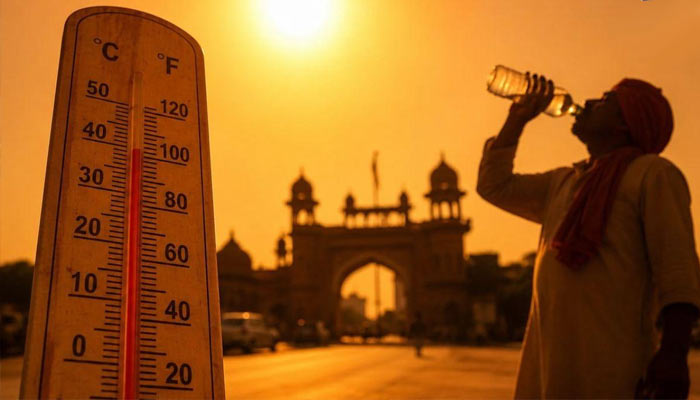
Delhi’s ‘Feels Like’ Temperature Hits 53.5°C: Why Humid Heat Is More Dangerous Than Dry Heat
Delhi experienced extremely uncomfortable weather on Tuesday as the city’s “feels like” temperature, or heat index, climbed to a scorching 53.5°C, even though the actual maximum temperature was 40.5°C. The sharp difference highlighted the impact of high humidity, which significantly increases the risk of heat-related illnesses.
According to the India Meteorological Department (IMD), Safdarjung recorded a maximum temperature of 40.5°C, while Palam touched 41°C. Ridge emerged as the hottest station at 41.5°C—4.8 degrees above normal—and Ayanagar recorded 40.1°C.
While only trace rainfall was reported in parts of the city, rising humidity combined with intense heat pushed the heat index to dangerous levels.
What Is the Heat Index?
The heat index, commonly known as the “feels like” temperature, represents how hot the weather actually feels to the human body by factoring in both air temperature and relative humidity.
High humidity prevents sweat from evaporating efficiently, making it harder for the body to cool itself. As a result, conditions that register around 40–42°C can feel well above 50°C, placing far greater stress on the body than the thermometer alone suggests.
Why Humid Heat Is More Dangerous
Health experts warn that humid heat can be more dangerous than dry heat because it disrupts the body’s natural cooling mechanism.
Normally, sweat evaporates from the skin and carries away excess body heat. But when moisture levels in the air are high, sweat remains on the skin instead of evaporating, causing the body’s core temperature to rise more rapidly.
This can increase the risk of:
Heat exhaustion
Heatstroke
Severe dehydration
Cardiovascular stress
Organ failure in extreme cases
Older adults, children, outdoor workers and people with existing heart or respiratory conditions are especially vulnerable during periods of high humidity.
Why Delhi Feels So Uncomfortable
Meteorologists say the oppressive weather is being driven by the interaction of two different air masses.
Hot, dry winds arriving from Pakistan have kept daytime temperatures elevated, while moisture-laden southwesterly winds from the Arabian Sea have significantly increased humidity. The combination has created extremely uncomfortable conditions across the national capital.
According to weather experts, these contrasting air masses also encourage cloud formation later in the day. However, because the clouds typically develop after peak afternoon heating, they provide little immediate relief from the day’s intense heat.
Relief Not Immediate
Although isolated thunderstorms are expected over the next few days, weather experts say they are unlikely to bring lasting relief. Humidity levels are expected to remain high until the southwest monsoon fully advances into Delhi.
Until then, residents are likely to continue experiencing “feels like” temperatures far higher than the actual air temperature, making precautions against heat-related illnesses especially important.
Authorities advise people to stay hydrated, avoid prolonged outdoor exposure during peak afternoon hours and watch for symptoms such as dizziness, excessive sweating, confusion and fatigue, which could indicate heat exhaustion or heatstroke.
Comments are closed.