

US Completes Fresh Wave of Strikes on Iran; Trump Says Tehran ‘Wants to Make a Deal’
The United States carried out another major round of airstrikes on Iran early Thursday, targeting around 90 military sites along the country’s coastline as tensions between Washington and Tehran escalated despite an earlier ceasefire. Shortly after the operation concluded, US President Donald Trump claimed Iran was now seeking negotiations, saying Tehran “wants to make a deal.”
US Hits 90 Military Targets
The US Central Command (CENTCOM) said American forces struck approximately 90 Iranian military targets, including air defence systems, coastal surveillance assets, missile and drone storage facilities, naval capabilities and logistics infrastructure.
According to CENTCOM, the operation was aimed at weakening Iran’s ability to threaten commercial shipping through the Strait of Hormuz, one of the world’s most critical maritime trade routes.
“The United States is holding Iran accountable for recent aggression against commercial shipping,” CENTCOM said, adding that the strikes were intended to safeguard freedom of navigation.
Railway Bridges Targeted for First Time Since Ceasefire
According to Axios journalist Barak Ravid, US cruise missiles also struck two railway bridges in northern Iran, marking the first attack on civilian transport infrastructure since the April ceasefire.
Iranian state television later reported the suspension of rail services between Tehran and Mashhad, blaming what it described as a “US-Israeli attack.” Repair teams have been deployed, while buses are transporting stranded passengers.
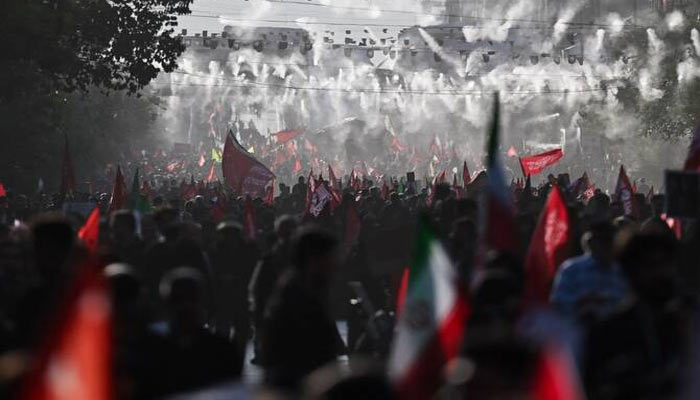
The attacks came just hours before the funeral of former Supreme Leader Ali Khamenei in the holy city of Mashhad.
Iran Reports Casualties
Iran’s Health Ministry said the latest two days of US airstrikes have killed at least 14 people and injured 78 others.
State media reported explosions across several southern cities, including Bandar Abbas, Chabahar, Konarak, Sirik and Bushehr, while parts of Chabahar experienced power outages. Officials also said a firefighter was killed in an airstrike near an airport in Iranshahr.
Trump Warns of More Strikes
Speaking aboard Air Force One, President Trump said Iran had reached out to Washington and was eager to negotiate.
“They want to make a deal so badly,” Trump told reporters, though he questioned whether Tehran would honour any agreement.
Earlier, Trump defended the latest military action, saying it was retaliation for attacks on commercial vessels in the Strait of Hormuz.
“If it happens again, it will get much worse,” he warned.
The US President also suggested any broader military campaign would be short, saying that “anything that happens is going to happen very fast.”
Iran Vows Retaliation
Iranian leaders responded defiantly, insisting they would continue to defend their interests.
Parliament Speaker Mohammad Bagher Ghalibaf warned the United States that “bullying and breaking promises are no longer cost-free.”
“If you strike, you’ll get hit,” he wrote on X.
Senior military adviser Mohsen Rezaei also vowed that the United States and its allies would face severe consequences.
Conflict Intensifies Around Strait of Hormuz
The latest strikes followed Tuesday’s attacks on three commercial ships transiting the Strait of Hormuz, which Washington blamed on Iran. In response, the US launched large-scale strikes earlier this week, while Iran retaliated by targeting American military facilities in Kuwait and Bahrain.
CENTCOM said it had struck more than 80 Iranian military targets in Tuesday’s operation, including Revolutionary Guard naval assets and air defence systems.
US officials later said all Iranian missiles and drones launched against American bases were intercepted or caused no significant damage.
Global Concern Grows
The renewed fighting has pushed oil prices sharply higher and raised fears of a wider regional conflict. The United Nations, Pakistan and Qatar have urged both sides to exercise restraint and return to diplomacy.
Meanwhile, thousands of seafarers remain stranded around the Strait of Hormuz as uncertainty over maritime security continues to disrupt one of the world’s busiest energy shipping corridors.
Comments are closed.