
UPI Charges Explained: What You Pay for Fuel, Phone Purchases and Restaurant Bills

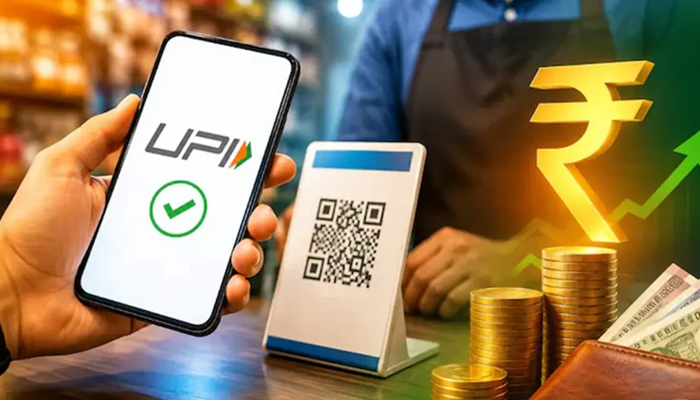
UPI CHARGES EXPLAINED: WHO WILL PAY AND WHEN?
Is India’s era of completely free UPI payments coming to an end? The answer is more nuanced than a simple yes or no.
Under the new Merchant Discount Rate (MDR) framework announced by the National Payments Corporation of India (NPCI), ordinary customers will continue to make UPI payments without paying any transaction fee. The charges will primarily apply to merchants receiving certain higher-value payments.
The framework will come into effect from October 15. According to the government, the charges are designed to support banks, payment service providers and other participants that keep the UPI ecosystem running and expanding.
CUSTOMERS WILL NOT PAY THE CHARGE
For individuals, there is no change in the cost of making UPI payments.
Person-to-person transactions will remain completely free, regardless of the amount being transferred. So, if you send ₹10,000 to a friend or family member, neither you nor the recipient will be charged an MDR.
The same principle applies when customers pay merchants. A UPI user buying groceries, refuelling a vehicle or purchasing another product will not be asked to pay an additional UPI fee.
For merchant payments above ₹2,000, the applicable MDR is paid by the merchant rather than the customer.
WHAT HAPPENS TO PAYMENTS UP TO ₹2,000?
Merchant transactions of up to ₹2,000 will continue without an MDR.
This means a customer paying ₹1,000 at a grocery store, for example, will pay exactly ₹1,000. No additional UPI charge will be added to the bill.
Small merchants also receive protection under the framework. Merchants with monthly UPI receipts of up to ₹1 lakh will not have to pay the charge.
WHEN DOES MDR APPLY?
For merchant transactions above ₹2,000, an MDR of 0.4% will apply, subject to a maximum charge of ₹300 per transaction.
Importantly, the merchant—not the customer—is responsible for paying this amount.
For example, if a customer makes a ₹6,000 payment at a restaurant, the MDR at 0.4% would be ₹24. The customer still pays only ₹6,000, while the restaurant bears the MDR.
Similarly, a ₹30,000 mobile phone purchase would attract an MDR of ₹120 at the 0.4% rate, payable by the merchant.
₹5 CHARGE FOR SELECTED SECTORS
Some sectors will have a flat MDR of ₹5 on transactions above ₹2,000.
These include sectors such as railways, telecommunications, insurance, fuel and agricultural inputs.
So, if you pay ₹5,000 for fuel through UPI, you will still pay ₹5,000. The applicable ₹5 MDR is payable by the merchant or service provider.
WHAT ABOUT MUTUAL FUNDS AND STOCK MARKET PAYMENTS?
Certain capital-market transactions will fall under a separate MDR structure.
Payments involving mutual funds, securities, stockbrokers and dealers will attract an MDR of 0.02%, subject to a maximum of ₹300 per transaction.
Again, the charge is not intended to be collected from individual customers.
WHERE DOES THE MONEY GO?
The MDR is not a government tax, and the government or NPCI does not directly collect it as a tax.
According to the government’s explanation, the revenue will be distributed among participants in the digital-payment ecosystem, including banks and payment application providers. The stated objective is to help cover operating costs and support the continued expansion of UPI infrastructure.
FOUR SIMPLE EXAMPLES
Fuel payment:
You fill your car’s tank and receive a ₹5,000 bill. You pay ₹5,000. A ₹5 MDR applies because the transaction is above ₹2,000, but the merchant bears the charge.
Restaurant bill:
Your restaurant bill is ₹6,000. At 0.4%, the MDR works out to ₹24. You still pay ₹6,000; the restaurant pays the MDR.
Mobile phone purchase:
A phone costs ₹30,000. The applicable 0.4% MDR is ₹120. The customer pays ₹30,000, while the seller bears the charge.
Money transfer to a friend:
You transfer ₹10,000 to a friend. No MDR applies because it is a person-to-person transaction. Both the sender and recipient remain free of the charge.
CAN A MERCHANT PASS THE CHARGE TO CUSTOMERS?
This is one of the key concerns for UPI users.
The government has said merchants should not pass the MDR on to customers. Banks have been advised to ensure that merchants do not transfer the charge to consumers.
UPI application providers are also not permitted to impose platform fees or hidden charges on individuals under the framework.
Therefore, a merchant should not add a separate “UPI charge” to a customer’s bill simply because the payment is being made through UPI.
NO MONTHLY LIMIT ON FREE UPI USAGE
The framework does not introduce a monthly quota for free UPI transactions.
Individuals can continue using UPI without a monthly transaction-value threshold for charges. Existing daily transaction limits imposed by banks and NPCI remain applicable, but these are security and risk-management measures rather than fee thresholds.
Depending on the type of transaction and the bank, such limits can generally range from ₹1 lakh to ₹5 lakh.
SMALL MERCHANTS REMAIN PROTECTED
The government estimates that the ₹2,000 threshold will keep around 96% of person-to-merchant UPI transactions outside the MDR framework, leaving approximately 4% subject to charges.
A dedicated fund is also proposed to encourage UPI adoption among small merchants. The government says an amount equivalent to 5% of total MDR collections will be contributed to the fund to support wider acceptance and continued use of digital payments among small businesses.
WHY HAS THE MDR FRAMEWORK BEEN INTRODUCED?
The framework has been introduced under the Payment and Settlement Systems Act, 2007.
The government’s stated objective is to create a sustainable financial model for UPI while keeping person-to-person payments free and protecting smaller merchants.
In practical terms, the new structure shifts the cost of selected higher-value merchant transactions to businesses rather than individual customers. For most everyday UPI users, payments will therefore continue to be free, while banks, payment providers and other ecosystem participants receive a revenue stream to support the operation and expansion of India’s digital-payment network.
Comments are closed.