
Article 370 to Statehood Demand: How J&K’s Constitutional Status Has Evolved

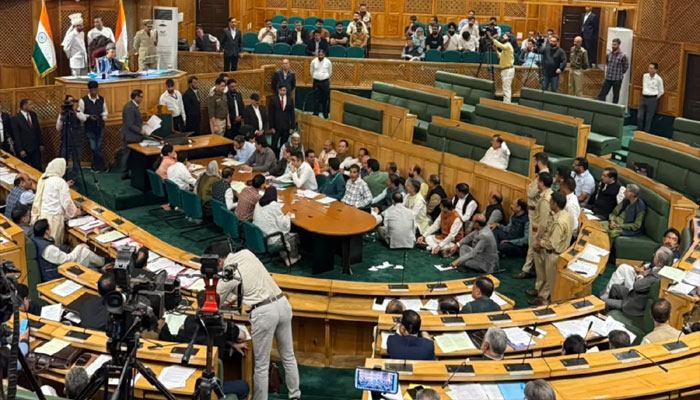
As Jammu and Kashmir Chief Minister Omar Abdullah moved a resolution in the Assembly on Monday, September 28, seeking the immediate restoration of statehood, several amendments were proposed.
Some sought references to Articles 370 and 35A, the constitutional provisions associated with the region before August 5, 2019. Although those amendments were later withdrawn, the discussion once again brought Jammu and Kashmir’s special constitutional arrangements into focus.
What Was Article 370?
Article 370 provided special constitutional arrangements for Jammu and Kashmir and governed the manner in which the Indian Constitution applied to the erstwhile state.
Under the original arrangement, Parliament’s legislative powers over Jammu and Kashmir were limited primarily to matters covered by the Instrument of Accession — defence, external affairs and communications — along with other matters agreed upon through the constitutional process.
The provision also allowed Jammu and Kashmir to have its own Constitution, in addition to the Constitution of India. Over time, however, several provisions of the Indian Constitution were extended to the state through presidential orders.
The Supreme Court, in its December 2023 judgment on the constitutional changes made in 2019, described Article 370 as providing special arrangements for the governance of Jammu and Kashmir. The court also noted that Presidential Orders 272 and 273 applied the entire Constitution of India to the erstwhile state and rendered Article 370 inoperative.
On August 5, 2019, the Union government announced a series of constitutional changes concerning Jammu and Kashmir. Parliament also passed the Jammu and Kashmir Reorganisation Act, 2019, which divided the erstwhile state into the Union Territories of Jammu and Kashmir and Ladakh.
The Supreme Court subsequently upheld the Union government’s 2019 decision to abrogate Article 370 in its December 2023 judgment.
Comments are closed.