
CJP Protest in Delhi: Supreme Court Asks Centre to Restore Metro Services, Lift Internet Restrictions

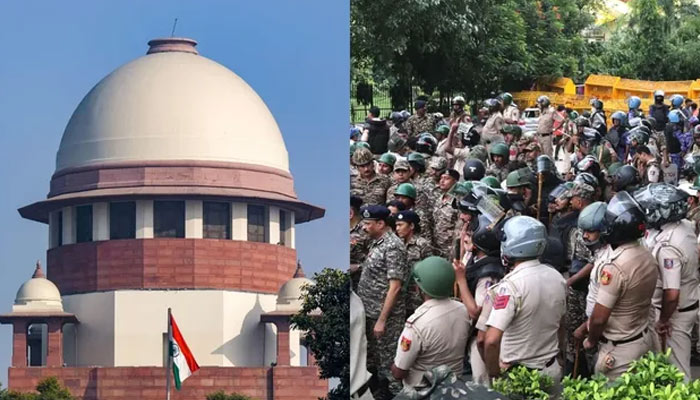
Supreme Court Directs Centre to Restore Normal Metro Services, Prevent Internet Disruptions Amid CJP Protests in Delhi
The Supreme Court on Sunday directed the Centre to ensure that Delhi Metro services run according to their regular schedule and that internet services remain uninterrupted amid protests organised by the Cockroach Janta Party (CJP) over alleged irregularities in the Special Intensive Revision (SIR) of electoral rolls. The party is demanding the resignation of Chief Election Commissioner Gyanesh Kumar.
The directions came as the apex court heard petitions challenging restrictions on movement and the right to peaceful protest in the national capital. The hearing took place amid prohibitory orders imposed under Section 163 of the Bharatiya Nagarik Suraksha Sanhita (BNSS) on Bhagwan Das Marg, where the Supreme Court is situated.
The court said it would hear all sides on the restrictions imposed in Delhi and seek to ensure that the situation did not cause unnecessary inconvenience. Senior advocates alleged that lawyers and other citizens had faced police brutality and severe restrictions on movement during Saturday’s demonstrations, arguing that their right to peaceful protest had been curtailed.
Supreme Court Seeks Clarity on Metro Restrictions
During the hearing, Solicitor General Tushar Mehta told the court that the overall volume of Delhi Metro operations had not been reduced on October 10. He said entry and exit restrictions had been imposed at only 15 per cent of the network’s 303 stations.
Justice Joymalya Bagchi sought further details, observing that 57 Metro stations had initially been affected and asking the authorities to provide a map showing their locations.
Mehta informed the court that all Metro stations had been open since 10 pm on Saturday and that none remained closed on Sunday. The Supreme Court also sought details of railway circulars issued in connection with the protest-related restrictions.
Advocate Jai Anant Dehadrai, appearing for police personnel, told the court that officers had also faced violence during the demonstrations.
Justice Bagchi stressed that the courts must remain impartial towards individuals involved in such situations, observing that the life and liberty of citizens and police officers were equally important.
CJP Leaders Released After Preventive Detention
CJP leaders Abhijeet Dipke, Ashutosh Ranka and Saurav Das were released on Sunday after being produced before an executive magistrate at Delhi Cantonment Police Station. They had been preventively detained ahead of the party’s planned demonstration at Jantar Mantar on Saturday.
According to the party’s head of legal affairs, Ratna Singh, the magistrate released the three leaders on the condition that they would not breach the peace for one year.
The leaders had been detained aboard an Air India flight after it landed in Delhi from Mumbai, where they were travelling ahead of the planned protest. Police said Dipke was informed of his grandmother’s death and offered assistance in travelling home.
However, CJP’s Ajinkya Shinde, who was designated to lead the demonstration, said the agitation would continue until Gyanesh Kumar resigned.
The party announced another round of protests for Sunday, reiterating its intention to march to Jantar Mantar and continue the demonstration until its demands were met.
Opposition Leaders and Activists Detained Across Delhi
Saturday’s protest against the Election Commission triggered extensive security restrictions across the capital. Opposition leaders and activists, including Arvind Kejriwal, Mamata Banerjee, Pinarayi Vijayan, Neha Bora, Yogendra Yadav and Prashant Bhushan, were among those detained at different locations.
With Jantar Mantar sealed off, activists urged supporters to regroup at Dilli Haat. Bora, Yadav and Bhushan were detained, while Banerjee and other Trinamool Congress leaders were detained outside her Delhi residence. Kejriwal and AAP leader Saurabh Bharadwaj were detained near Jantar Mantar, while Vijayan was taken to Chhatrasal Stadium.
Police sources said approximately 25,000 police and paramilitary personnel had been deployed in Delhi, with at least 1,200 people detained overnight. Separately, reports indicated that around 6,000 people had been detained across the capital by 7 pm on Saturday.
In Mumbai, police closed August Kranti Maidan and detained hundreds of people supporting the CJP, including Tushar Gandhi, the great-grandson of Mahatma Gandhi.
Delhi Chief Minister Rekha Gupta said the capital would not be held hostage and described the CJP as the “B-Team” of the Congress and AAP.
Traffic Restrictions Expected Across Delhi on Sunday
The Delhi Traffic Police warned that traffic could be affected across several areas of New Delhi and Central Delhi on Sunday, October 11, because of the prevailing law-and-order situation.
Diversions were scheduled to begin at 6 am, depending on circumstances, with restrictions potentially affecting 30 locations across the city.
The affected stretches included Dhaula Kuan Flyover, Jhandewalan, Mandi House, Connaught Place, Jantar Mantar Road, Lodhi Road Flyover, Patel Chowk and areas surrounding Rail Bhawan and RML Hospital.
Commuters travelling to railway stations, inter-state bus terminals and the airport through New Delhi and Central Delhi were advised to allow extra travel time, plan their journeys in advance and avoid non-essential trips.
For traffic-related updates, people were asked to contact the Delhi Traffic Police helpline at 1095 or 011-25844444.
CJP Alleges Voter-List Irregularities
The CJP has accused Chief Election Commissioner Gyanesh Kumar of overseeing alleged manipulation of voter lists during the Special Intensive Revision of electoral rolls. The party has made his resignation a central demand of its agitation.
Delhi Police had denied permission for the proposed demonstration, citing security concerns and insufficient advance notice.
The Supreme Court’s intervention comes amid the continuing dispute over restrictions on public gatherings, movement and access to transport services during the protests. The court has sought information from the authorities on the measures imposed and directed the Centre to ensure normal Metro operations and uninterrupted internet services in Delhi.
Comments are closed.