
Japan Looks to India’s Test Ranges for Powerful Missiles, Smaller Attack Drones

Japan Explores Indian Test Ranges for Long-Range Missiles, Small Attack Drones
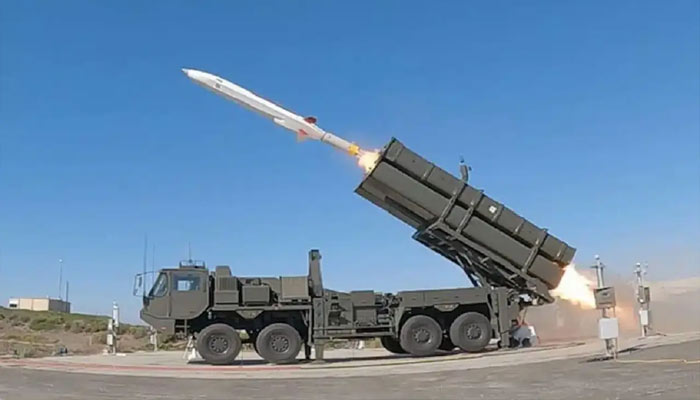
Japan has sent officials to India to explore the possibility of using its missile testing ranges for long-range weapons, including the Type-25 anti-ship missile, as well as smaller attack drones. The move is part of Tokyo’s efforts to identify suitable training facilities that can accommodate the growing range and capabilities of its advanced weapons.
General Masayoshi Arai, chief of staff of Japan’s Ground Self-Defense Force (GSDF), said on Tuesday that officials had been dispatched to India to examine options for conducting training with the Type-25 missile, which has an estimated range of around 1,000 kilometres, The Japan Times reported.
“We are currently examining this issue, including how to secure training environments domestically and, if necessary, how to utilise training environments overseas,” Arai said.
According to Japan’s public broadcaster NHK, the officials travelled to India earlier this month and inspected several potential sites over approximately a week.
Japan Considers Overseas Facilities for Drone Testing
Japan’s interest in Indian testing facilities extends beyond long-range missiles. Arai said discussions with Indian counterparts also covered the possibility of testing small attack drones at the country’s weapons ranges.
Tokyo is developing a multilayered coastal defence network that would combine large numbers of relatively low-cost unmanned aerial, surface and underwater vehicles for surveillance and strike missions. The network would also incorporate standoff missiles capable of striking targets from outside an adversary’s engagement range, according to The Japan Times.
Access to suitable testing environments is important for evaluating the performance of these systems and preparing them for operational use. Japan’s assessment of overseas facilities reflects its efforts to identify training options that may not be readily available within its own territory.
India-Japan Defence and Strategic Partnership
India and Japan share a Special Strategic and Global Partnership built around democratic values, economic cooperation and defence and maritime collaboration in the Indo-Pacific.
The two countries have expanded their engagement in recent years, with security cooperation forming an important part of their broader relationship. Potential access to Indian missile ranges could offer another area for examining defence cooperation, although the outcome of Japan’s assessment remains unclear.
In July, Japanese Prime Minister Sanae Takaichi visited India for the 16th India-Japan annual summit in New Delhi, where she met Prime Minister Narendra Modi. The leaders reviewed bilateral ties and discussed priorities under the countries’ Special Strategic and Global Partnership.
The talks covered economic security, resilient supply chains, defence manufacturing, artificial intelligence, clean energy and cooperation towards a free and open Indo-Pacific.
Japan’s latest assessment of Indian testing facilities comes amid its efforts to strengthen coastal defence capabilities and expand training options for its next-generation weapons systems.
Comments are closed.