
Indira Gandhi’s Candid Remark to Feroze Gandhi: ‘I Don’t Mind Who You Go Out With’—But There Was One Condition

Indira Gandhi’s Marriage With Feroze: The Remarkable Condition Behind Her ‘I Don’t Mind Who You Go Out With’ Remark
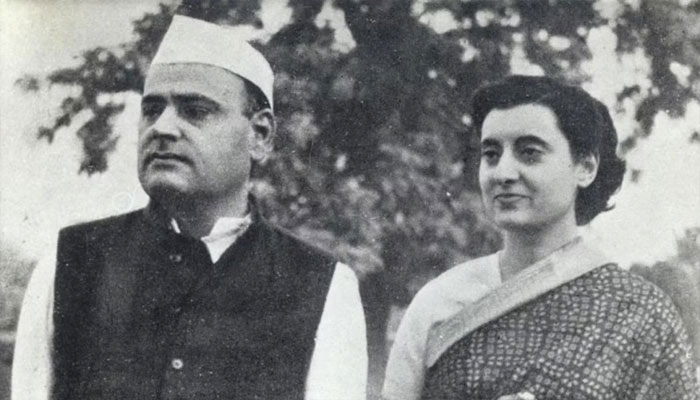
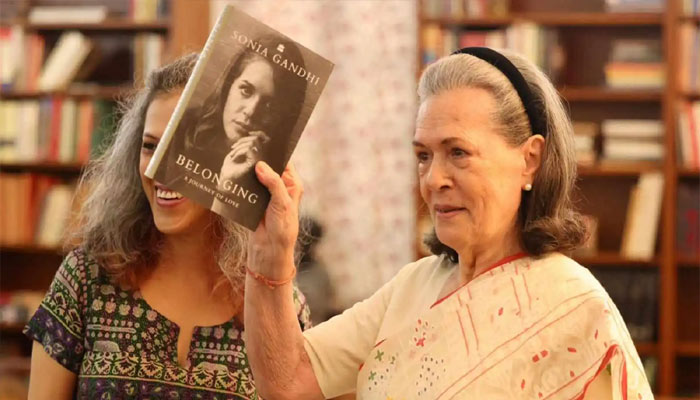
Former Prime Minister Indira Gandhi’s relationship with her husband, Feroze Gandhi, was marked by affection, disagreements and periods of separation. Fresh insights into their complicated marriage have emerged through Sonia Gandhi’s memoir, Belonging: A Journey of Love, which draws on personal letters, family memories and conversations.
Among the most striking revelations is a letter Indira reportedly wrote to Feroze after hearing about gossip surrounding his social life. Addressing the situation, she made an unusual admission: she did not mind whom he went out with or what he did, as long as he was happy and kept her informed rather than allowing her to hear rumours from others.
Indira and Feroze married in 1942 and had two sons, Rajiv Gandhi, born in August 1944, and Sanjay Gandhi, born in December 1946. Their relationship, however, became increasingly complicated after India gained independence in 1947 and Jawaharlal Nehru became the country’s first Prime Minister.
According to Sonia’s account, Nehru increasingly depended on Indira for official responsibilities. As the Prime Minister’s daughter and official hostess, she accompanied him on domestic and international tours, leaving Feroze to manage his own parliamentary and professional commitments.
The arrangement initially had Feroze’s approval, but he gradually became uncomfortable with the growing demands on Indira’s time.
Sonia also recounts how protocol at official dinners sometimes placed Indira beside her father, while Feroze was seated much farther away. Such situations reportedly became a source of embarrassment and hurt for him, contributing to the emotional distance between the couple.
FEROZE’S INDEPENDENT LIFE AND MARITAL DIFFERENCES
By the mid-1950s, Feroze had moved into a separate residence available to him as a Member of Parliament. Sonia describes him as a sociable personality who enjoyed friendships and the company of women.
It was during this period that Indira reportedly wrote to him expressing her willingness to accept his personal choices, provided he remained honest with her.
However, their differences eventually became more serious. Sonia reveals that Feroze developed a relationship that caused Indira considerable emotional distress. The couple reportedly considered a formal separation following a heated argument.
Feroze approached Nehru to discuss the matter, while Indira also believed he should speak to someone he trusted. Nehru intervened and reasoned with his son-in-law. After several months, Feroze dropped the idea of pursuing a separation.
Despite their marital difficulties, the relationship between Feroze and his children remained affectionate. Rajiv Gandhi later recalled spending time at his father’s residence and visiting him regularly.
HEALTH CRISES BROUGHT THE COUPLE CLOSER
A major turning point came in 1958, when Feroze suffered his first heart attack. Indira, who was travelling in Bhutan with Nehru, returned to look after him and spent considerable time by his side during his recovery.
The concern was mutual. When Indira underwent kidney stone surgery in 1959, Feroze remained close to her throughout the treatment.
According to Sonia, the couple gradually overcame some of their earlier differences. In 1960, the entire family, including Indira, Feroze and their two sons, went on a holiday to Kashmir.
Their reconciliation, however, was short-lived. Just three months later, Feroze suffered another heart attack, which proved fatal. Indira rushed back from Kerala to the hospital, where she remained with him during his final moments.
Feroze Gandhi died in September 1960 at the age of 48.
INDIRA’S REGRETS REVEALED IN PERSONAL LETTERS
Reflecting on their marriage, Sonia writes that she often wondered how two people who experienced such intense disagreements could remain emotionally connected.
Going through their correspondence after Indira’s death helped her understand that, despite their periods of separation and bitter arguments, their emotional bond had never completely disappeared.
Sonia also recalls Indira telling her that Feroze was the only man she could ever have married and the only person she had truly loved.
Another deeply personal revelation came from an unfinished note Indira had left among her papers. Addressing Sonia, she wrote that she saw glimpses of herself in her daughter-in-law and recognised many of Feroze’s qualities in Rajiv.
Sonia further recalls that Indira once advised her against making an impulsive decision about marriage after learning that her younger sister was considering separating from her husband.
Indira reportedly told her to avoid taking such a step while angry or hurt, adding that she had always regretted her own separation from Feroze.
The recollections in Sonia Gandhi’s memoir offer an intimate account of a marriage shaped by political responsibilities, personal differences and enduring affection, revealing a lesser-known side of one of India’s most influential political families.
Comments are closed.