
Why Centre Is Considering Special Parliament Session Ahead Of Winter Session For Women’s Quota, Delimitation Bills

Possible Special Parliament Session Before Winter Session As Centre Pushes Delimitation And Women’s Quota Bills
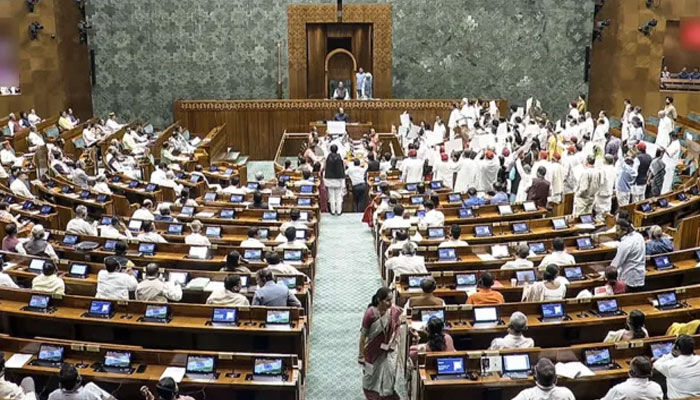
The Centre is reportedly exploring the possibility of convening a special session of Parliament ahead of the Winter Session to secure the passage of crucial legislation concerning delimitation and the implementation of the women’s reservation law.
The proposed legislative package is aimed at operationalising the 33% reservation for women in the Lok Sabha and state assemblies, potentially from the 2029 general elections. However, the government faces a significant challenge in securing the numbers required to pass the constitutional amendment.
BJP sources indicated that the Winter Session could begin on November 30 or December 4, leaving room for a brief special session beforehand. The government has not officially announced a decision on the proposed arrangement.
A senior Union Minister said there was no fixed requirement for the Winter Session to begin in the third week of November, suggesting that Parliament could meet separately before its regular winter sitting.
NDA sources said the government was considering two routes for passing the legislative package: a special session or the Winter Session itself. Allies have reportedly been given the impression that the latter remains a more likely option.
The proposed constitutional amendment is linked to three Bills: the Constitution Amendment Bill, the Delimitation Bill and the Union Territories Laws (Amendment) Bill. Together, they are intended to establish the framework for implementing women’s reservation through a fresh delimitation exercise. The proposal could increase the strength of the Lok Sabha from 543 to a maximum of 850 seats.
Government Faces A Two-Thirds Majority Challenge
Passing the constitutional amendment remains the biggest challenge for the BJP-led NDA. Under Article 368, a constitutional amendment requires the support of a majority of the total membership of each House and at least two-thirds of members present and voting. The provision cannot be cleared through a joint sitting of Parliament.
The government had faced a setback on April 17, when its earlier constitutional amendment proposal failed to secure the necessary support in the Lok Sabha. The accompanying delimitation and Union Territories Bills consequently could not proceed.
According to BJP sources, the NDA currently has 320 MPs in the Lok Sabha and 155 in the Rajya Sabha. The ruling alliance therefore needs additional support from opposition parties and regional players to clear the legislation.
However, government representatives have now expressed confidence that they can secure the required numbers, claiming a potential margin of 15–18 votes beyond the threshold. The Centre has not publicly disclosed the complete details of its support calculations.
DMK’s Position Could Be Crucial
The DMK’s response is expected to play an important role in determining the legislation’s prospects, particularly because of concerns among southern states over the proposed delimitation exercise.
The party has reportedly not rejected delimitation entirely but wants a written assurance from the Centre that Tamil Nadu and other southern states will not lose their relative representation because of population-control measures.
The government has been exploring a proposal to increase the Lok Sabha’s seat allocation for every state by 50%, while maintaining existing inter-state representation ratios. However, no final decision on the formula has been announced.
Tamil Nadu Chief Minister and TVK leader C Joseph Vijay has also called for a clear legislative guarantee that southern states will not be disadvantaged in parliamentary representation.
BJP leaders believe that a favourable position from the TVK could influence the DMK’s approach to the proposed legislation.
Will The Samajwadi Party Support The Proposal?
The Samajwadi Party (SP) is another important factor in the government’s calculations. The BJP is preparing to contest the Uttar Pradesh Assembly elections next year, but party leaders believe the SP could reconsider its opposition to delimitation.
The SP’s 37 Lok Sabha MPs had opposed the constitutional amendment proposal in April. However, BJP leaders argue that Uttar Pradesh could gain significantly from an expansion of parliamentary representation, making it difficult for the opposition party to reject the exercise.
The counterargument is that SP chief Akhilesh Yadav may be reluctant to support a BJP-backed constitutional amendment so close to the state elections.
Abstentions could also change the effective voting strength and reduce the number of votes required for a two-thirds majority. Nevertheless, the NDA would still need additional support to overcome the shortfall under the current calculations.
Special Session Dates Yet To Be Finalised
Although government sources have expressed confidence about the numbers, the dates and duration of the proposed special session remain undecided.
The government is continuing discussions with political parties to address concerns over delimitation and the distribution of parliamentary seats. The immediate objective is to secure approval for the constitutional amendment and advance the implementation of women’s reservation before the 2029 Lok Sabha elections.
For now, the proposed special session remains under consideration, with the Winter Session offering another opportunity for the government to take up the pending legislation.
Comments are closed.