
Historic UN Court Verdict: Myanmar Found Guilty Of Genocide Against Rohingya

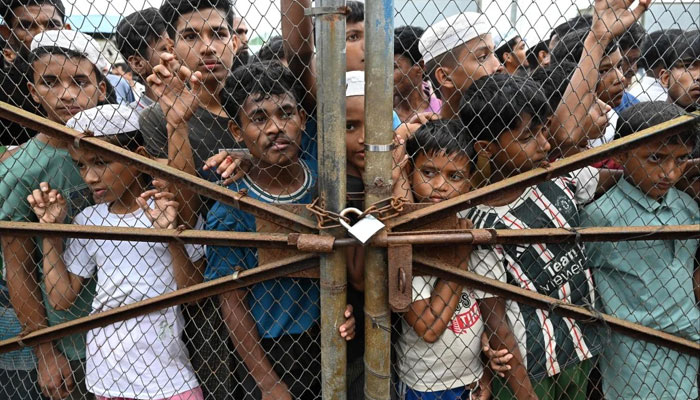
In a landmark judgment, the International Court of Justice (ICJ) on Thursday ruled that Myanmar committed genocide against its Rohingya minority during the military crackdown in 2017.
The United Nations’ top judicial body also directed Myanmar to facilitate the safe and voluntary return of displaced Rohingya refugees and ensure compensation for victims.
The verdict marks a historic moment in the ICJ’s 80-year history, as it is the first time the court has formally determined that a state committed genocide. The decision is being viewed as a significant step towards accountability for the atrocities inflicted on the predominantly Muslim Rohingya community.
Delivering the judgment at the Peace Palace in The Hague, ICJ President Yuji Iwasawa declared that Myanmar had committed genocide against the Rohingya population in northern Rakhine State.
During the nearly three-hour proceedings, the judges examined extensive evidence of violence carried out by Myanmar’s security forces during the 2017 military operation. The campaign forced hundreds of thousands of Rohingya to escape across the border into Bangladesh.
The court highlighted killings of thousands of civilians, widespread sexual violence against women and extreme brutality against children. It also noted the systematic destruction of Rohingya villages and their subsequent occupation by people from other communities.
According to the judges, the available evidence supported the conclusion that Myanmar’s actions were driven by an intention to destroy the Rohingya population, meeting a fundamental requirement for establishing genocide under international law.
ICJ ORDERS SAFE RETURN OF ROHINGYA REFUGEES
Alongside its finding of genocide, the ICJ directed Myanmar to ensure that displaced Rohingya refugees can return to their homes safely, voluntarily and with dignity.
The court also instructed the country to investigate allegations of genocide, identify those responsible and ensure that individuals found guilty face punishment. The question of financial compensation for victims will be addressed separately at a later stage.
Although ICJ judgments are legally binding and cannot be appealed, the court does not have an independent mechanism to enforce its decisions. Consequently, Myanmar’s willingness to comply with the ruling remains uncertain.
Nevertheless, the judgment could intensify international scrutiny of Myanmar’s leadership, particularly Min Aung Hlaing, who was commanding the country’s military during the 2017 crackdown.
Hlaing later seized power in a 2021 military coup that removed the elected government led by Aung San Suu Kyi. He subsequently assumed the civilian presidency following elections that faced significant restrictions and international criticism.
MORE THAN ONE MILLION ROHINGYA LIVE IN BANGLADESH REFUGEE CAMPS
The ruling has particular significance for more than one million Rohingya refugees currently living in Bangladesh, including survivors who fled Myanmar following the military operation.
For many victims, the judgment represents an opportunity to seek justice after years of displacement, violence and uncertainty.
Ahead of the verdict, a 23-year-old Rohingya woman who survived sexual violence expressed her hope that the court would ensure accountability for those responsible.
She called for strict punishment for individuals involved in raping Rohingya women and urged the international judicial system to recognise the suffering of survivors.
Refugees who escaped the crackdown have described horrifying incidents involving gang rapes, mass killings, executions and attacks on families, including women and children.
THE GAMBIA BROUGHT GENOCIDE CASE AGAINST MYANMAR
The proceedings originated from a case filed by The Gambia under the 1948 United Nations Genocide Convention. The agreement, established after World War II, allows countries to approach the ICJ over alleged violations of the convention by another state.
The Gambia initiated the legal action after examining reports documenting widespread violence and persecution against the Rohingya community.
The country received support from the 57-member Organisation of Islamic Cooperation (OIC), which backed its efforts to pursue accountability through international law.
During the proceedings, Gambian Justice Minister Dawda Jallow emphasised that the case concerned the lives and suffering of real people rather than merely legal questions.
Myanmar, meanwhile, consistently rejected the genocide allegations. Its representatives maintained that the 2017 military operation was a response to attacks by Rohingya insurgents that had killed security personnel.
During hearings in January, Myanmar’s representative Ko Ko Hlaing argued that the country could not remain inactive while armed groups carried out attacks.
The ICJ’s ruling now establishes Myanmar’s responsibility for genocide in the case, despite its longstanding denials.
VERDICT COULD HAVE IMPLICATIONS FOR OTHER GENOCIDE CASES
The landmark decision was also closely followed by international legal experts because of its potential relevance to another major case before the ICJ concerning allegations of genocide against Israel in Gaza.
The Myanmar judgment has renewed attention on how the court examines evidence, establishes genocidal intent and determines state responsibility under the Genocide Convention.
For Rohingya survivors, however, the immediate concern remains accountability and the possibility of returning to their homeland.
Mohammed Osman, a 20-year-old refugee, said he hoped the judgment would eventually allow him to return to Myanmar and perform the last rites for his parents and younger brother, who were killed during the military crackdown.
Recalling the violence, he described how his father was shot dead, while his mother and other women were sexually assaulted before their family home was set on fire.
For thousands of families who lost relatives, homes and livelihoods, the ICJ’s historic ruling represents a major legal development. However, whether it will translate into justice, compensation and a safe return for displaced Rohingya remains to be seen.
Comments are closed.