
Indonesia Wildfires: Scientists Warn Damaged Ecosystems May Need 350 Years to Recover

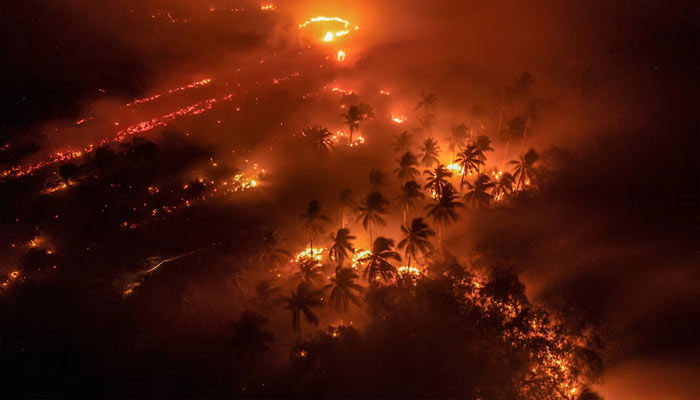
Indonesia Wildfires Leave Lasting Ecological Damage, Scientists Warn Carbon Recovery Could Take 350 Years
Indonesia is facing a long environmental recovery following widespread wildfires in 2026, with scientists warning that restoring the carbon lost from damaged landscapes could take as long as 350 years. The fires have affected vast stretches of grasslands, tropical forests and peatlands across Papua, Sumatra and Borneo, raising concerns about long-term climate and biodiversity losses.
A scientific analysis published by The Conversation estimates that approximately 1.9 million hectares of land had been destroyed by fires by late September. This represents a 38 per cent increase compared with the area burnt during the 2019 wildfire season.
Researchers estimate that the fires released nearly 100 million tonnes of carbon into the atmosphere, equivalent to around 370 million tonnes of carbon dioxide. The emissions are comparable to the annual output of approximately 97 coal-fired power plants.
Peatlands Suffer the Most Severe Damage
The destruction of peatlands has emerged as one of the biggest environmental concerns. Although peatlands accounted for roughly 400,000 hectares, or 20 per cent of the total burnt area, they were responsible for nearly 80 per cent of the carbon emissions.
These wetlands act as major natural carbon storage systems. They accumulate partially decomposed plant material over thousands of years, storing enormous quantities of carbon beneath the surface.
When peatlands catch fire, this accumulated carbon is released into the atmosphere, making their restoration particularly challenging.
According to the analysis, peatlands affected by the 2026 fires could require approximately 400 years to recover under favourable restoration conditions. Replacing around 90 per cent of the carbon lost could take roughly 350 years if restoration efforts are repeatedly disrupted.
Other ecosystems may recover at different rates. Grasslands can regenerate within a few rainy seasons, while agricultural land, plantations and shrublands generally require several years. Secondary forests may need 20 to 50 years to rebuild their carbon reserves, whereas the recovery of undisturbed tropical forests and their biodiversity could extend over several centuries.
Previous Restoration Efforts Face Fresh Challenges
Indonesia has previously undertaken major initiatives to protect its vulnerable peatland ecosystems. Following the devastating fires of 2015, the government established the Peatland Restoration Agency with a target of restoring 2.5 million hectares.
Its work included blocking drainage canals to maintain water levels and prevent peatlands from drying out. Before its dissolution in 2025, the agency reported restoring 1.6 million hectares outside commercial concessions.
However, subsequent fires have affected several areas that were previously identified as restoration priorities, including South Sumatra, West Kalimantan and Central Kalimantan.
Researchers point out that the difficulties extend beyond technical limitations. Economic interests, disputes over land ownership and traditional agricultural practices continue to complicate conservation programmes.
In some rural communities, burning remains an inexpensive way to clear land for cultivation. In parts of Riau province, land cleared through burning can reportedly fetch 1.3 times the price of land prepared by cutting vegetation.
Growing demand for commodities such as palm oil has also increased pressure on vulnerable landscapes.
Scientists Call for Long-Term Conservation Strategies
Experts believe that simply planting trees or blocking drainage channels will not be sufficient to reverse the damage. Effective restoration requires sustained government involvement, community participation and alternative livelihood opportunities for people living near peatlands.
Providing economic incentives to discourage land burning and encouraging sustainable agricultural practices are also considered important steps.
The research highlights the long-lasting consequences of Indonesia’s wildfire crisis. While vegetation may begin returning within a few years, rebuilding the carbon reserves and ecological functions of severely damaged peatlands could take centuries.
Scientists warn that without consistent conservation policies and preventive measures, the environmental consequences of the 2026 fires could continue affecting Indonesia and the global climate for generations.
Comments are closed.