
AI set to track drifting icebergs in boost for climate science
Using satellite images, the tool captures the distinct shape of icebergs as they break off -- or calve -- from glaciers and ice sheets on land.

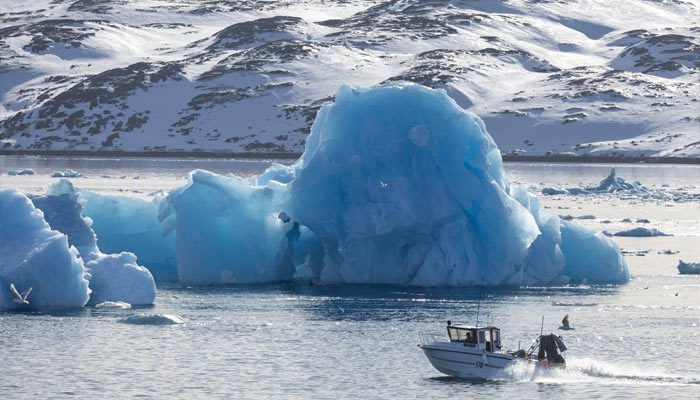
British scientists on Thursday unveiled a world-first artificial intelligence tool capable of cataloguing and tracking icebergs.
As they fracture into smaller pieces — a breakthrough they say could close a major gap in climate change predictions. Icebergs release vast amounts of freshwater as they melt in the open ocean, influencing global climate systems, ocean circulation and marine ecosystems. However, once large icebergs break into thousands of smaller fragments, scientists have historically struggled to monitor their movement and long-term impact.
To address this blind spot, the British Antarctic Survey (BAS) has developed an AI-based system that automatically identifies and names icebergs at the moment they calve from glaciers or ice sheets, then tracks their journeys — sometimes lasting decades — until they fully melt.
Using satellite imagery, the system recognises the distinct shapes of icebergs at birth. As the icebergs fragment over time, the AI links the smaller “child” pieces back to their original “parent”, effectively assembling detailed iceberg family trees at a scale previously impossible.
The approach marks a significant improvement over existing methods, which rely on scientists manually scanning satellite images and typically tracking only the largest icebergs individually.
Tested using satellite observations over Greenland, the system delivers what BAS described as “vital new information” for climate researchers, helping refine models of how freshwater from melting icebergs enters the oceans — a process expected to intensify as the planet warms.
“What’s exciting is that this finally gives us the observations we’ve been missing,” said Ben Evans, a machine-learning expert at the British Antarctic Survey. “We’ve gone from tracking a few famous icebergs to building full family trees. For the first time, we can see where each fragment came from, where it goes and why that matters for the climate.”
Beyond climate science, researchers said the technology could also be adapted to improve maritime safety by helping ships navigate iceberg-filled polar waters.
While iceberg calving is a natural process, scientists warn that the rate of ice loss from Antarctica is accelerating, likely driven by human-induced climate change — making precise tracking increasingly critical.
Comments are closed.