

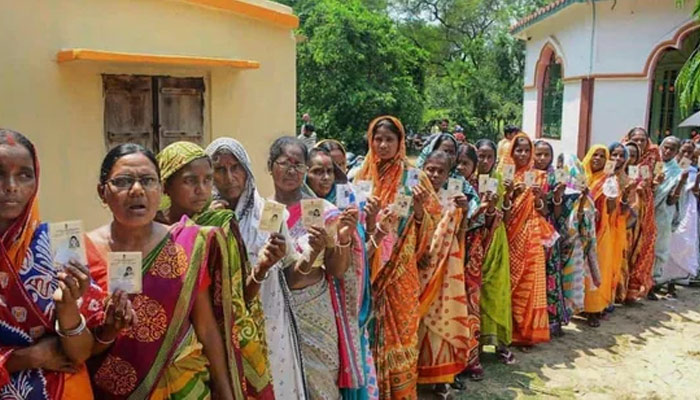
Two key states where the Bharatiya Janata Party has long struggled for dominance are voting today, but the spotlight is firmly on West Bengal, where a high-stakes contest is underway.
Phase 1 of the assembly elections covers 152 of the state’s 294 constituencies across 16 districts, with nearly 3.6 crore voters eligible to cast their ballots. Crucial battlegrounds include Nandigram as well as north Bengal regions such as Darjeeling, Siliguri, Jalpaiguri, and Cooch Behar. Of these, at least 80 seats are expected to witness closely fought contests.
For Trinamool Congress and the BJP, this election represents a defining moment, intensified by the political storm over the revision of voter lists.
After three consecutive terms since 2011—when she ended the 35-year Left rule—Chief Minister Mamata Banerjee faces what many describe as her toughest electoral test yet. A similar narrative had emerged in 2021, when the Trinamool Congress secured a sweeping victory with 215 seats, while the BJP won 77.
Since then, the BJP has steadily chipped away at the Trinamool’s advantage, campaigning aggressively on issues such as corruption, law and order, and alleged gaps in development. The Trinamool, in turn, has framed the election as a battle for Bengal’s identity—positioning itself against what it calls “outsider” influence and accusing the Centre of withholding funds.
A major flashpoint this time is the Election Commission’s Special Intensive Revision (SIR) of electoral rolls, which has reportedly removed around 89 lakh voters—about 11.6% of the electorate. The scale of the revision is significant, exceeding the Trinamool’s victory margin in 2021 and potentially reshaping outcomes in several closely contested districts.
Key Trinamool candidates in this phase include Goutam Deb (Siliguri), Udayan Guha (Dinhata), Firhad Hakim (Kolkata Port), and Pabitra Kar (Nandigram). On the BJP side, Suvendu Adhikari is contesting from his stronghold Nandigram and is also set to challenge Mamata Banerjee in Bhabanipur in the next phase. Other prominent BJP faces include Union Minister Nisith Pramanik and former state president Dilip Ghosh.
Security has been ramped up significantly, with the Election Commission deploying over 2.4 lakh personnel across 2,407 companies of Central Armed Police Forces, effectively turning the state into a fortified zone.
The second phase of polling is scheduled for April 29, with counting set for May 4—dates that could prove निर्णायक in shaping Bengal’s political future.
Comments are closed.