
Bihar Assembly Elections Phase 2: High voter turnout as Seemanchal region takes center stage

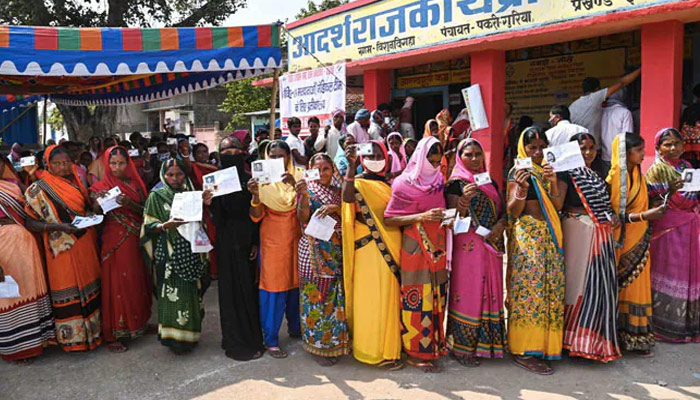
Bihar went to the polls on November 11 for the second and final phase of its high-stakes Assembly elections, with 3.7 crore voters deciding the fate of 1,302 candidates across 122 constituencies.
The concluding phase is being seen as crucial, with the performance of smaller regional parties likely to influence the final outcome. The state had recorded its highest-ever voter turnout — over 65% — in the first phase, and officials expect similar enthusiasm this time. Tight security measures are in place, with more than four lakh personnel deployed across polling stations to ensure smooth and fair voting.
The campaign leading up to this phase saw heated exchanges between the ruling NDA and the opposition INDIA bloc. Prime Minister Narendra Modi said Bihar had already given the opposition a “65-volt jhatka,” while Congress leader Rahul Gandhi, speaking in Kishanganj, accused the BJP and RSS of dividing the country and said the INDIA bloc was uniting it.
A key focus in this round is the Seemanchal region, which includes districts such as Kishanganj, Araria, Supaul, Purnia, Madhubani, and Champaran. The Muslim-majority belt remains a politically sensitive area where both the NDA and INDIA bloc are seeking to strengthen their foothold.
Smaller regional parties could play a decisive role in close contests. Jitan Ram Manjhi’s Hindustani Awam Morcha (HAM), Mukesh Sahni’s Vikassheel Insaan Party (VIP), and Upendra Kushwaha’s Rashtriya Lok Morcha (RLM) are all vying for relevance. AIMIM, led by Asaduddin Owaisi, is focusing on Seemanchal, aiming to consolidate Muslim votes and repeat its 2020 success when it won five seats.
Among notable candidates are JD(U) veteran Bijendra Prasad Yadav from Supaul, BJP’s Prem Kumar from Gaya Town, and former deputy CM Tarkishore Prasad from Katihar. Several constituencies have multi-cornered contests, with some seeing up to 22 candidates in the fray.
Polling is being held at 45,399 stations, most of them in rural areas. Of the total electorate, around 1.75 crore are women voters, highlighting the broad participation in this decisive phase that will determine Bihar’s political future.
Comments are closed.