
China Backs Trump’s Claim of India-Pakistan Truce, Highlights “Settling Hotspots”

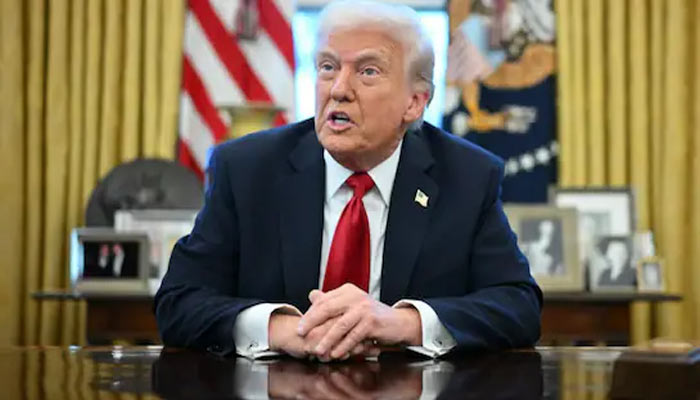
China Echoes Trump on India-Pakistan “Truce,” Claims Role in Regional Conflict Resolution.
After former U.S. President Donald Trump, China has claimed credit for mediating peace between India and Pakistan during the military conflict earlier this year, despite India’s repeated rejection of third-party intervention. Like Trump, Chinese officials positioned Beijing as a peace negotiator in multiple global hotspots, including northern Myanmar, the Cambodian-Thai border, and the Iranian nuclear issue.
Speaking at the Symposium on the International Situation and China’s Foreign Relations in Beijing, Foreign Minister Wang Yi said, “This year, local wars and cross-border conflicts flared up more often than at any time since the end of WWII. To build lasting peace, we have taken an objective and just stance and focused on addressing both symptoms and root causes.”
Wang Yi specifically cited tensions between India and Pakistan as one of the “hotspot issues” mediated by China. “Following this approach, we also mediated in northern Myanmar, the Iranian nuclear issue, the tensions between Pakistan and India, issues between Palestine and Israel, and the recent conflict between Cambodia and Thailand,” he added.
India’s Stand on the Ceasefire
New Delhi has maintained that the May 7-10 military conflict with Pakistan, known as Operation Sindoor, was resolved through direct talks between the Director Generals of Military Operations (DGMO) of both countries. The Ministry of External Affairs stated on May 13, 2025:
“Regarding ceasefire and the role of other countries, the specific date, time, and wording were worked out directly between the DGMOs of the two countries during their phone call on 10 May 2025, commencing at 15:35 hours.”
India has consistently rejected any third-party involvement in bilateral military matters.
China’s Role in India-Pakistan Tensions
China’s involvement during Operation Sindoor came under scrutiny due to its military assistance to Pakistan. Diplomatically, Beijing urged restraint from both nations while expressing regret over India’s airstrikes. A Chinese Foreign Ministry statement described India’s military operation as “regrettable” but opposed “all forms of terrorism,” referencing the Pahalgam terrorist attack.
China’s close ties with Pakistan, including arms exports that constitute over 81% of Pakistan’s military hardware, have been cited as a factor straining New Delhi-Beijing relations. Indian officials, including Deputy Chief of Army Staff Lt Gen Rahul R. Singh, alleged that China used the conflict strategically, describing it as a “live lab” for its military influence.
China-India Relations
Despite tensions, Wang Yi highlighted positive developments in bilateral ties, citing Beijing’s invitations to Indian and North Korean leaders for the Shanghai Cooperation Organisation (SCO) summit in Tianjin. He described China-India relations as showing “good momentum” and the SCO summit as a “resounding success.” Wang added that China’s engagement with neighboring countries is entering a “new stage” of building a community with a shared future.
On China-US Relations and Global Economics
Wang Yi also addressed U.S. tariffs, saying that economic globalization faced setbacks due to unilateral measures, which disrupted trade rules and the global economic order. He called the China-US relationship “one of the most consequential bilateral relationships in today’s world” and stressed the need for equality, mutual respect, and reciprocity to address differences.
He praised the frequent interactions between Trump and Xi Jinping for “guiding the giant ship of China-US relations through troubled waters” and emphasized that both countries must seek solutions through dialogue while protecting their core interests.
Comments are closed.