
China’s DeepSeek Used Nvidia’s Top Chip to Train AI Despite US Ban, Official Says

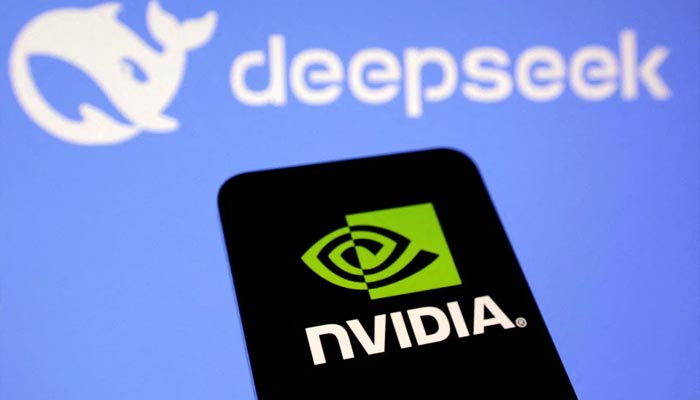
Chinese AI startup DeepSeek trained its latest AI model on Nvidia’s most advanced AI chip, the Blackwell, despite US export controls, a senior Trump administration official revealed on Monday.
The model, expected to launch as early as next week, may have relied on the high-end chips clustered at DeepSeek’s data center in Inner Mongolia, potentially circumventing US restrictions.
The official noted that DeepSeek is likely removing technical markers that could reveal the use of American chips. “We’re not shipping Blackwells to China,” the official emphasized, declining to explain how the US obtained information about DeepSeek’s chip usage or how the firm acquired the hardware.
Nvidia declined to comment, while the Commerce Department and DeepSeek did not respond to requests for statements. The Chinese embassy in Washington condemned the reporting, arguing that the US is “drawing ideological lines, overstretching national security, and politicizing economic and technological issues.”
The disclosure comes amid a growing debate in Washington over Chinese access to the most advanced American AI semiconductors. China hawks warn that advanced chips could be repurposed for military applications, threatening US dominance in AI. Meanwhile, White House AI Czar David Sacks and Nvidia CEO Jensen Huang have argued that allowing some shipments discourages Chinese competitors like Huawei from attempting to match US technology.
US export controls currently bar Blackwell shipments to China. While former President Donald Trump briefly allowed Nvidia to sell a scaled-down version of the chip, the plan was later reversed to keep the top-tier technology for US companies. Shipments of the second-most advanced H200 chips, which Trump later approved in principle, remain stalled due to regulatory guardrails.
Experts say DeepSeek’s use of smuggled Blackwells highlights China’s domestic shortfall in advanced AI chips, and H200 approvals could provide a critical lifeline for Chinese firms.
The official added that DeepSeek likely employed a technique called “distillation,” using models from leading US AI companies, including OpenAI, Google, Anthropic, and xAI, to enhance its own AI systems. Distillation involves having a more powerful model guide the training of a newer model, effectively transferring knowledge.
Based in Hangzhou, DeepSeek made headlines last year with AI models rivaling top US offerings, intensifying concerns in Washington that China could catch up in AI despite restrictions on chip exports.
Comments are closed.