
Climate Alert: Greenhouse Gas Rise Driving Deadlier Weather Patterns

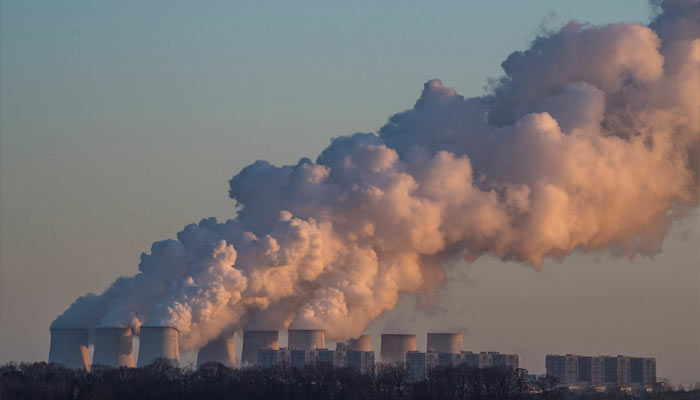
Global Warming Could Pass Critical Threshold by 2028, Scientists Warn.
A new international climate study has found that humanity is on course to emit enough greenhouse gases within the next three years to make limiting global warming to 1.5°C almost impossible.
According to the report, set to be released Thursday in Earth System Science Data, continued emissions at current levels will leave the world with a 50-50 or greater chance of locking in long-term warming above the 1.5°C (2.7°F) threshold by early 2028. That level was set as a key target under the 2015 Paris Climate Agreement.
“We’re not just falling short — we’re accelerating in the wrong direction,” said Zeke Hausfather, a co-author and climate scientist at Berkeley Earth and tech company Stripe. “There’s no silver lining in this report.”
Tipping Toward Irreversibility
Scientists estimate that only 143 billion more tons of carbon dioxide can be released before the 1.5°C goal becomes technically out of reach. The world currently emits about 46 billion tons annually — meaning the carbon budget will be exhausted by February 2028 if current trends continue.
So far, the planet has warmed about 1.24°C since preindustrial times. Although 2024 temporarily exceeded the 1.5°C mark, the Paris target is based on sustained long-term averages, typically measured over 20 years.
Warming Is Accelerating
The report finds that Earth’s rate of warming is now nearly 0.27°C per decade. More alarmingly, the planet’s “energy imbalance” — the difference between heat absorbed from the sun and heat radiated back into space — has increased by 25% in just over a decade. This imbalance is one of the clearest indicators of accelerating climate change.
“We’re breaking climate records everywhere,” said lead author Piers Forster of the University of Leeds. “I don’t see a realistic path anymore for avoiding 1.5°C.”
While fossil fuel emissions remain the primary culprit, other factors also contribute — including reduced air pollution (which once had a cooling effect) and changes in cloud cover.
What Exceeding 1.5°C Means
Crossing the 1.5°C threshold is not a sudden cliff, scientists emphasize, but it does mark a point beyond which climate impacts intensify significantly. These include more extreme heat waves, longer droughts, stronger storms, rising sea levels, and disproportionate suffering for the world’s most vulnerable populations.
“Each tenth of a degree means worse outcomes,” said Andrew Dessler, a climate scientist at Texas A&M University. “Missing 1.5 isn’t the end of the world — but it is a warning of how fast we’re approaching the limits.”
Still Time to Act — But Less of It
Despite the grim projections, researchers stress the need for urgent action. “Even if we miss the 1.5°C target, cutting emissions remains critical to avoid far worse impacts in the decades ahead,” said Joeri Rogelj of Imperial College London.
The bottom line: every ton of carbon avoided, and every fraction of a degree prevented, still matters.
Comments are closed.