
Dhurandhar Review: Ranveer Singh, Akshaye Khanna Shine in Aditya Dhar’s Gripping Political Thriller

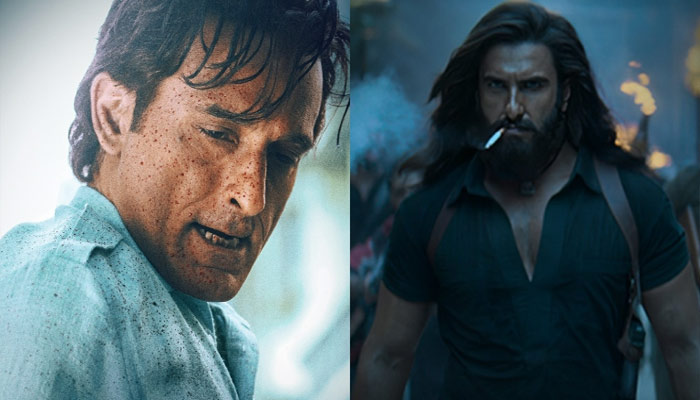
Aditya Dhar, who redefined mainstream patriotic cinema with Uri: The Surgical Strike, returns with his second feature, Dhurandhar—a sprawling political thriller.
That blends espionage, gang warfare and national security with a distinctly stylised edge. Rather than relying on familiar jingoistic tropes, Dhar builds his narrative on moral dilemmas, internal conflict and brutal realism, punctuated by pulsating hip-hop and atmospheric background music.
Dhurandhar is an unapologetically violent film, dense with profanity and gore, yet none of it feels gratuitous. The brutality becomes a narrative device, shaping the world and its characters instead of merely shocking viewers. Structured across seven chapters, the film demands patience; its complex, multi-decade story—loosely based on true events—unfolds through an intricate political, intelligence and underworld landscape.
The story begins in 1999 during the IC-814 hijacking crisis. Intelligence Bureau Chief Ajay Sanyal reluctantly agrees to release Pakistani terrorists under diplomatic pressure but is determined to seek retribution. The Parliament attack two years later becomes a tipping point. Along with the Indian government, Sanyal initiates Operation Dhurandhar—an audacious plan to penetrate the heart of Pakistan’s terror network.
The mission is handed to Hamza, an Indian operative sent deep into Lyari, a violence-ridden Karachi neighbourhood controlled by feuding criminal factions—Rehman Dakait, Babu Dakait and Arshad Pappu. Hamza embeds himself within Rehman’s gang, nudging internal rivalries while passing crucial intelligence back to India. As Rehman aligns with ISI officer Major Iqbal to facilitate an attack on Indian soil, the stakes rise sharply.
The narrative gains urgency post the 26/11 Mumbai attacks. Hamza’s inner turmoil intensifies as he confronts the human, moral and emotional cost of his mission. Meanwhile, Iqbal grows suspicious of Hamza’s identity, pushing the film toward a taut confrontation. At 3 hours and 30 minutes, Dhurandhar is undeniably long, but Dhar’s thorough world-building and attention to character detail ensure that the story rarely loses momentum.
Like Uri, Dhar grounds his film in the ethos of a “new India”—assertive, strategic and unflinching. He incorporates real footage and intercepted audio from 26/11 to heighten authenticity. Cinematographer Vikash Nowlakha’s stark, textured portrayal of Lyari—dusty, claustrophobic and perpetually on edge—adds a striking visual layer, turning the neighbourhood into a character of its own. Shashwat Sachdev’s music is another major asset. His mix of retro tracks, rap influences, Sanskrit chants and ambient rhythms gives the film a dynamic, contemporary pulse and elevates several action sequences.
Among the standout moments is the chase sequence featuring “Piya Tu Ab To Aaja” reimagined with hip-hop beats, and Sanjay Dutt’s stylish entry to “Hawa Hawa,” underscoring his effortless swagger and humour. Even the film’s most violent scenes—heads smashed, bodies burned—are interspersed with dry, character-driven humour that breaks tension without undermining the narrative.
The film benefits immensely from its cast. Ranveer Singh delivers a controlled, internalised performance as Hamza—a man constantly balancing fear, patriotism and guilt. One of his strongest moments comes during a scene where he’s forced to join the celebration of the 26/11 attacks, torn between his cover and his conscience.
Akshaye Khanna is electrifying as Rehman Dakait, portraying menace with quiet intensity. Arjun Rampal’s Major Iqbal is one of the most imposing villains in recent memory—chilling, charismatic and dangerously unpredictable. Sanjay Dutt’s SP Choudhary Aslam brings an entertaining blend of brutality and sardonic humour. Supporting actors including Sara Arjun, R Madhavan and Rakesh Bedi add warmth, gravity and well-timed levity.
Dhurandhar is not merely a spectacle of violence; it’s a story about the hidden toll of patriotism, the personal cost of duty and the ambiguities of war. Despite its daunting runtime, it is gripping, ambitious and visually commanding. The film sets the stage for a larger arc in its anticipated sequel—not through a cliffhanger, but through the weight and momentum of the world it builds.
This is a bold, immersive and emotionally textured political saga that rewards the patient viewer and reaffirms Aditya Dhar as one of contemporary Indian cinema’s most assured storytellers.
Comments are closed.