
‘Effects Could Last Decades’: How the Iran War May Erode America’s Military Edge

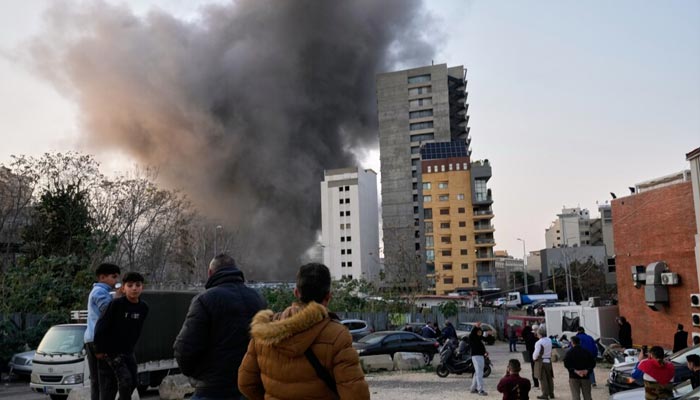
Analysts are raising concerns about the political strategy behind the United States’ war with Iran, warning.
That while military operations may be tactically successful, the absence of a clearly defined objective could have long-term consequences for the strength and readiness of the United States Armed Forces.
Jennifer Kavanagh, director of military analysis at the Washington-based think tank Defense Priorities, said the prolonged conflict could reshape the United States’ global military posture. “The long-term consequences could be significant,” she said. “This kind of sustained conflict could affect the United States’ ability to project power for years, if not decades.”
Michael Rubin, a senior fellow at the American Enterprise Institute, said the operational side of the campaign appeared effective but criticised the lack of a coherent political framework guiding the strikes.
“The military planning has been strong,” Rubin said. “But politically this is becoming increasingly chaotic because the United States appears to have targeting strategies without a clearly defined goal.”
Since Washington began building up forces in the region earlier this year, the stated objectives of the mission have shifted multiple times — from backing anti-government protests inside Iran to dismantling Tehran’s nuclear programme, destroying its ballistic missile systems, and most recently reopening the Strait of Hormuz after Iran shut the critical oil shipping route.
Michael Singh, a former senior director for Middle East affairs at the National Security Council (United States) under George W. Bush, said each of these objectives would typically require a different military strategy.
With Iran now closing the Strait of Hormuz, Singh noted that Tehran could increasingly shape the duration and trajectory of the conflict. “The other side gets a vote in how and when the conflict ends,” he said.
Some analysts have also pointed to the governing approach of Donald Trump as a factor complicating the US response. After returning to office, Trump initiated a sweeping effort to dismantle what he described as Washington’s foreign policy “deep state”, reducing the role of career officials across multiple government agencies.
Within months, the National Security Council (United States) was significantly downsized, while the United States Department of State underwent major layoffs under Secretary of State Marco Rubio.
Former US defence official Mara Karlin said limited coordination across agencies may have contributed to confusion in the early days of the conflict, including the lack of clear evacuation plans for American citizens in the region.
“Operational secrecy is important,” Karlin said. “But you also need systems in place so that the government can respond when events escalate.” The criticism comes as the conflict with Iran widens, posing growing military, economic and diplomatic challenges for the United States in the region.
Trump has also acknowledged the difficulty of achieving regime change in Iran. While he initially suggested that figures inside the country could seize power, many potential successors were reportedly killed during the early strikes.
Meanwhile, Iran’s internal security forces have suppressed public protests. “They literally have people in the streets with machine guns shooting protesters,” Trump said, suggesting that internal opposition faces significant obstacles.
The escalating conflict has also forced the United States Department of Defense to shift military resources from other strategic theatres, including air-defence systems previously deployed in Asia to deter threats from North Korea and China.
Some analysts warn that if the war drags on, it could strain US military capabilities and reduce Washington’s ability to respond quickly to future global crises.
Comments are closed.