
From Qualifier to Giant-Killer: Maja Chwalinska’s Dream French Open Run Continues

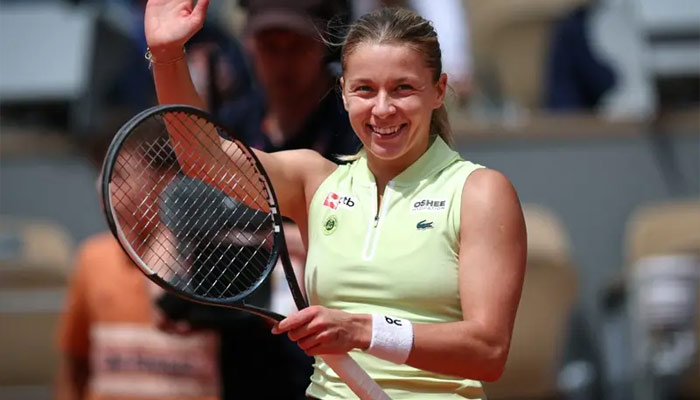
From Depression to Paris Dream: Maja Chwalinska’s Remarkable French Open Fairytale
Before the French Open began, the idea of Maja Chwalinska standing in a Grand Slam final would have sounded more like fiction than prediction. She arrived in Paris as a qualifier ranked outside the world’s top 100, carrying little expectation and even less attention. Outside devoted tennis circles, few would have imagined her name becoming one of the biggest stories of the tournament.
Yet tennis has always had a way of producing the unexpected.
Just two weeks later, Chwalinska stands one victory away from completing one of the most extraordinary runs in Grand Slam history. If she lifts the trophy, she will become only the second qualifier in the Open Era, after Emma Raducanu, to win a major singles title.
The transformation feels almost surreal.
Only months ago, Chwalinska occupied a modest role in Polish tennis. During the United Cup, she was briefly seen assisting compatriot and four-time Roland Garros champion Iga Swiatek, holding ice during a match. She was part of the supporting cast, not the headline act.
Now, she has emerged from the shadows to become the face of one of sport’s most inspiring stories.
A Career-Changing Fortnight
For years, Chwalinska’s career followed a path familiar to many players outside the elite ranks. Injuries repeatedly interrupted her progress, forcing her to spend much of her time grinding through ITF and Challenger events in pursuit of ranking points and financial stability.
When she arrived in Paris, she was ranked No. 114 in the world and had earned approximately $861,000 in career prize money. Despite years of hard work, she remained far from the spotlight enjoyed by the sport’s biggest stars.
Everything changed at Roland Garros.
Starting in qualifying, Chwalinska pieced together nine consecutive victories to reach her maiden Grand Slam final. The run has guaranteed her more than $1.4 million in prize money from a single tournament, more than doubling her career earnings and securing her financial future overnight.
Her journey has also highlighted the harsh realities faced by many professional players outside the top tier. Prize money is only paid after tournaments conclude, meaning that despite her success, Chwalinska still faced concerns over accommodation costs during the event. Support eventually arrived when Polish beverage company OSHEE stepped in to cover her hotel expenses, allowing her to focus entirely on tennis.
What began as an unlikely run has become a life-altering breakthrough.
The Darkest Chapter
Behind the fairytale lies a far more difficult story.
Around 2019, the pressure of professional tennis began taking a severe toll on Chwalinska’s mental health. The sport she once loved gradually became associated with anxiety, stress and emotional exhaustion.
The situation worsened over time.
By 2021, after competing in Wimbledon qualifying, she reached a point where continuing felt impossible. Chwalinska stepped away from tennis indefinitely, uncertain whether she would ever return.
Reflecting on that period, she later revealed the depth of her struggles.
“In 2019 I started to feel bad. First on the court, but after I also started to feel bad off the court, and it led me to depression. Something I enjoyed the most suddenly became a source of suffering.”
She described feeling trapped by pressure and overwhelmed by negative thoughts.
“I didn’t know that I would come back, to be honest, because things were not fine. There were dark thoughts. It was tough to even leave the house. I didn’t have any desire for anything.”
The comeback was neither immediate nor dramatic. There was no miraculous turnaround, only months of patient rebuilding. Tournament by tournament, she slowly rediscovered confidence, rhythm and enjoyment in the game.
The Run That Changed Everything
Even by Grand Slam standards, Chwalinska’s path to the final has been extraordinary.
Her breakthrough moment came in the opening round when she stunned reigning Olympic champion Zheng Qinwen. Facing one of the tournament’s most dangerous contenders, the Polish qualifier produced fearless tennis, winning the final eight games of the match to complete a remarkable upset.
That victory opened the door to a run few could have imagined.
Before arriving in Paris, Chwalinska had never recorded a top-50 win in a Grand Slam main draw. Over the course of the tournament, she has collected four such victories, defeating established players and proving her success is no fluke.
Her semifinal victory over Diana Shnaider showcased the qualities that have defined her fortnight. While Shnaider possessed greater firepower, Chwalinska consistently found answers through resilience, intelligent shot selection and composure under pressure. When the decisive moments arrived, it was the qualifier who remained calmest.
Now only Mirra Andreeva stands between Chwalinska and sporting immortality.
Whatever happens in the final, her journey has already become one of the defining stories of the French Open. It is a tale of persistence after disappointment, recovery after depression and belief in the face of overwhelming odds.
And should she complete the final chapter with a victory, Chwalinska’s Paris fairytale will become something even greater — one of the most inspiring comeback stories tennis has ever seen.
Comments are closed.