
G7 Foreign Ministers Reaffirm Backing for Ukraine, Steer Clear of Trade Disputes

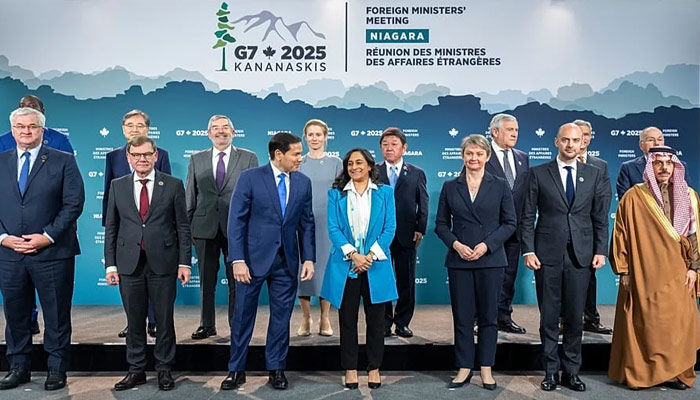
The Group of Seven (G7) foreign ministers concluded their two-day meeting in Ontario on Wednesday, reaffirming.
Their united support for Ukraine and Sudan while deliberately steering clear of contentious topics such as U.S. military strikes in the Caribbean and ongoing trade tensions. The talks, held in Niagara-on-the-Lake near the U.S. border, brought together diplomats from the G7 industrialized nations — Canada, the United States, the United Kingdom, France, Germany, Italy, and Japan — along with invited representatives from countries including Australia, India, Saudi Arabia, South Korea, Brazil, and Ukraine.
Focus on Ukraine and Russia Sanctions
Ukraine’s Foreign Minister Andriy Sybiha urged allies to sustain military and humanitarian aid as his country faces another harsh winter under heavy Russian aerial bombardment. “We have to move forward to pressure Russia, to raise the price for aggression, and to end this war,” Sybiha said.
In a joint statement, G7 ministers pledged to strengthen sanctions and increase economic pressure on Moscow, while targeting entities that fund or support Russia’s military operations. Canada announced new sanctions on individuals and organizations linked to Russia’s drone program, while the U.K. committed fresh funding to help restore Ukraine’s damaged energy infrastructure.
U.S. Secretary of State Marco Rubio said discussions focused on “strengthening Ukraine’s defense and finding a path toward ending this bloody conflict,” though he unveiled no new U.S. initiatives. “We are doing whatever is necessary to support Ukraine,” Canada’s Foreign Minister Anita Anand emphasized.
Avoiding Trade and Military Disputes
Despite the strong display of unity on Ukraine, the ministers avoided thorny disputes involving the United States — particularly recent U.S. air and naval strikes in the Caribbean Sea and eastern Pacific, which Washington claims targeted drug-smuggling vessels. Rubio told reporters the issue “didn’t come up once” during the meetings and dismissed reports that the U.K. had suspended intelligence sharing.
Trade tensions between Washington and Ottawa also remained off the table. U.S. President Donald Trump recently froze trade talks with Canada after an Ontario government advertisement opposing tariffs angered the White House. Asked about the issue, Anand declined to comment, saying, “I am here to talk about the work that the G7 ministers are doing.”
Broader Global Engagement
The Ontario meeting also underscored the G7’s broader engagement with emerging economies. Anand invited ministers from several non-G7 countries to discuss global challenges including humanitarian crises, energy security, and regional stability.
While no major breakthroughs were announced, diplomats characterized the gathering as an important step in reinforcing the G7’s collective stance on defending Ukraine, supporting Sudan’s democratic transition, and maintaining international unity amid growing geopolitical strain.
Comments are closed.