

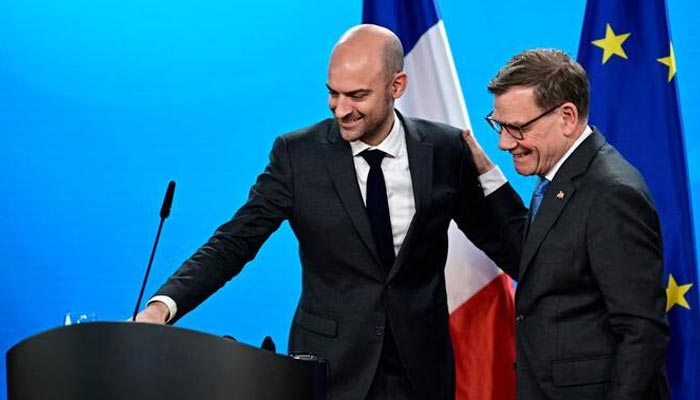
Germany and France on Wednesday urged immediate de-escalation of the conflict in the Middle East, warning of severe global consequences if the war drags on.
German Foreign Minister Johann Wadephul cautioned that continued disruption to global supply chains could trigger “a crisis of the gravest order”. “We must reach a point where military objectives are met and then move toward de-escalation and a cessation of hostilities,” Wadephul said, referring to operations by the US and Israel.
He warned that prolonged instability could have far-reaching impacts, including a potential food crisis in parts of Africa due to disrupted fertilizer supplies, as well as rising refugee flows.
Standing alongside him in Berlin, French Foreign Minister Jean-Noel Barrot echoed the call for “the swiftest possible de-escalation”.
“Military escalation carries major risks—for our interests, for the safety of our nationals, and for the global economy,” Barrot said.
Wadephul also said political change in Iran would be “desirable”, but stressed it must come from within, warning that external military interventions have failed to produce stable outcomes, citing experiences in Iraq and Libya.
Barrot added that Iran must be willing to make “major concessions” and shift its stance to enable a political solution—one that ensures peaceful coexistence in the region while allowing its people to determine their own future.
Comments are closed.