
Governor Review: Manoj Bajpayee’s Financial Thriller Struggles to Balance Message and Drama

Governor Review: Manoj Bajpayee Shines in a Financial Drama That Never Finds Its Purpose
It is 1990, and India stands on the brink of an economic collapse. Foreign exchange reserves are running dry, oil prices are surging amid geopolitical turmoil, and fears of a national financial breakdown are mounting. In the midst of this crisis, the government turns to an unlikely saviour — a brilliant economist appointed as the Governor of the Reserve Bank of India at a moment when few believe the country can be rescued.
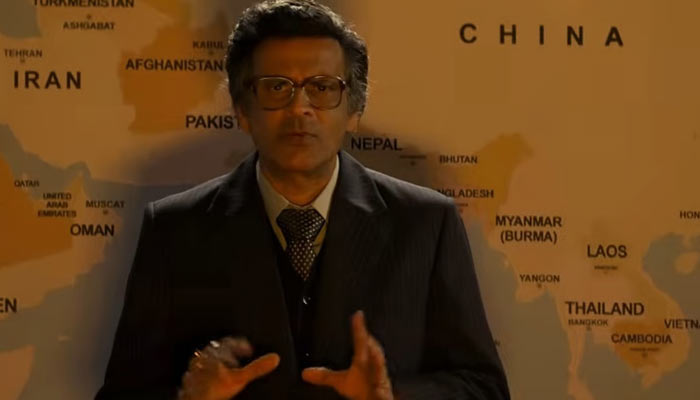
Played by Manoj Bajpayee, the Governor is inspired by former RBI chief S. Venkitaramanan. He enters a system weighed down by bureaucracy, political interference and institutional inertia. As he digs deeper, he discovers that the country’s financial situation is even more dire than expected. With reserves nearly exhausted and India’s global credibility at stake, he devises a daring plan: a secret mission to pledge the nation’s gold reserves abroad and prevent economic disaster.
On paper, Governor has all the ingredients of a gripping political-financial drama. The stakes are enormous, the historical backdrop is fascinating, and Bajpayee’s involvement raises expectations. Unfortunately, the film fails to capitalize on its compelling premise and settles for a shallow, often frustrating narrative.
Bajpayee is easily the film’s greatest strength. From his measured diction to his restrained body language, he convincingly inhabits the role of a seasoned bureaucrat navigating an unprecedented crisis. Yet even his committed performance cannot compensate for the film’s weak character writing.
The Governor remains more of a symbol than a fully realised human being. Early in the film, he witnesses a man set himself on fire under the weight of financial distress. While the incident appears intended to shape his worldview, the script never meaningfully explores its emotional impact. Beyond an occasional flashback, the moment serves little purpose.
The same lack of depth extends throughout the film. The Governor is portrayed as endlessly compassionate, humble and morally upright, but the screenplay rarely examines what drives him. Contradictions in his personality are introduced but never explored. Director Chinmay Mandlekar seems content to sketch the outline of a character without ever filling in the details.
The film’s visual presentation only compounds its problems. What should have been a tense, high-stakes drama often resembles a public service announcement or a corporate advertisement. Heavy-handed dialogue, overly sentimental background music and awkwardly staged sequences drain urgency from the story. At times, particularly during the liberalisation and privatisation montages, the film feels less like a political thriller and more like a promotional campaign.
Adah Sharma, meanwhile, is saddled with a thankless role as a journalist who is introduced as a potential challenger to the establishment but is never given anything meaningful to do. Several supporting storylines suffer the same fate. Whether it is the office peon’s daughter aspiring to become an IAS officer, the Governor’s own family ambitions, or a subordinate’s visa-related subplot, these narrative detours contribute little to the central story and only distract from the crisis at hand.
For a film built around one of the most dramatic chapters in India’s economic history, Governor lacks urgency, depth and gravitas. Its historical premise deserved sharper writing and stronger storytelling. Instead, it delivers a simplistic, overlong drama that struggles to justify its runtime.
In the end, Governor is remembered less for its exploration of a national crisis and more for the effort of a single actor trying to elevate material that never rises to meet his talent. Manoj Bajpayee delivers yet another committed performance, but even he cannot save a film that never fully understands the story it wants to tell.
Comments are closed.