

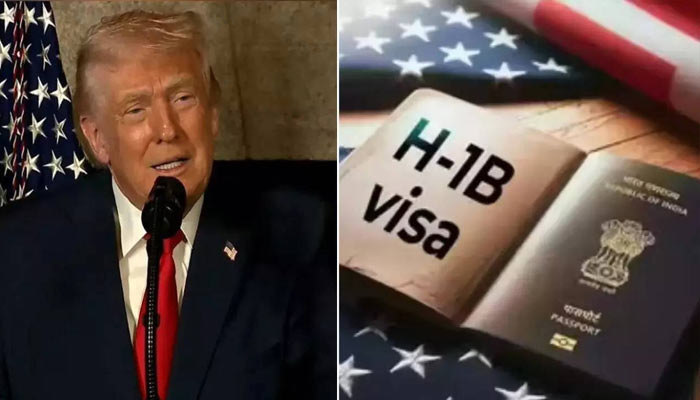
The legal challenge to the Trump administration’s $100,000 fee on H-1B visa applications has moved to an appeals court.
After a federal judge refused to block the measure, Bloomberg reported. The U.S. Chamber of Commerce, the country’s largest business lobbying group, filed a notice of appeal this week, challenging the District Court ruling that upheld the controversial fee increase.
The fee, announced via presidential proclamation in September, was introduced by President Donald Trump to curb what he described as abuse of the H-1B visa program, which allows U.S. employers to hire college-educated foreign workers for specialized roles in technology, engineering, and healthcare sectors.
In its October lawsuit, the Chamber argued that the sharp hike violated federal immigration law and exceeded the executive branch’s fee-setting authority granted by Congress. It claimed the proclamation unlawfully bypassed existing statutes governing visa costs.
However, U.S. District Judge Beryl Howell of the District of Columbia rejected these arguments in a December 23 ruling, finding that the president acted under an express statutory grant of authority. Howell, an Obama appointee, concluded that Trump had the legal power to impose the fee.
Bloomberg Intelligence litigation analyst Matthew Schettenhelm said the decision leaves the Chamber facing an uphill battle on appeal. “Though Judge Howell has been tough on the Trump administration in the past, she handed Trump a sweeping victory,” he noted. “If Judge Howell didn’t find legal defects in this novel proclamation, it is unlikely the D.C. Circuit or the U.S. Supreme Court would.”
The H-1B program is already under strain due to new rules requiring social media screening and banning visa stamping outside a visa-holder’s country of origin. These changes have caused major delays in visa processing and forced rescheduling of interviews at U.S. consulates worldwide, leaving many professionals stranded away from their jobs and families.
This case is among several legal challenges to the fee. More than a dozen mostly Democratic-led states have filed a separate lawsuit in Massachusetts, while a global nurse-staffing firm and several labor unions have sued in California. Legal experts predict the dispute could eventually reach the U.S. Supreme Court.
Opponents of the fee argue it will hurt institutions that rely on skilled foreign workers, including schools and hospitals, by restricting access to talent. States like California, already facing shortages of trained teachers, have relied on H-1B visa holders to fill critical gaps.
Comments are closed.