

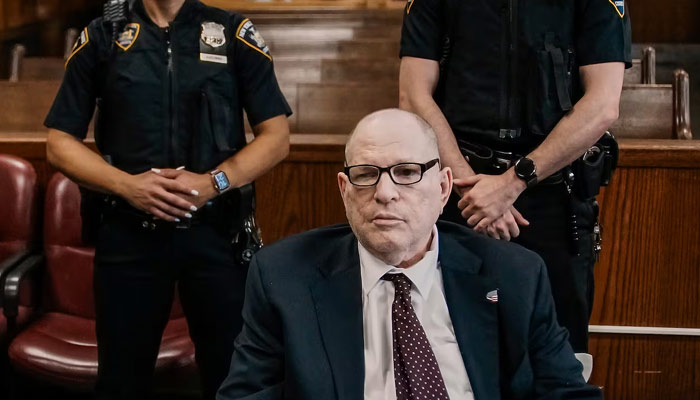
Prosecutors on Tuesday again portrayed Harvey Weinstein as a powerful Hollywood figure who allegedly exploited his influence to commit sexual assault, as his rape retrial opened in New York nearly eight years after his arrest.
“This case is about power, control and manipulation,” Manhattan Assistant District Attorney Candace White told jurors in opening statements, with District Attorney Alvin Bragg present in court.
Defense lawyer Jacob Kaplan pushed back, arguing the case centers on “consent, choice and regret,” and maintaining that the encounter in question was consensual.
Weinstein, a central figure in the #MeToo movement, has faced multiple trials across the US, resulting in a mix of convictions, acquittals and dismissed charges. The current retrial focuses on a 2013 rape allegation involving hairstylist-actor Jessica Mann—a charge that has persisted after an overturned conviction and a hung jury.
A narrower case
Unlike earlier trials, this proceeding is limited to a single allegation, though jurors will hear details about Weinstein and Mann’s relationship before and after the incident.
Weinstein has also changed his legal team, signaling a shift in courtroom strategy. Prosecutors, meanwhile, are seeking to introduce new testimony, including from a close friend of Mann, and potentially a court officer who claims Weinstein made an incriminating remark in 2020. The defense has objected.
Judge Curtis Farber has begun revisiting key evidentiary issues, including restricting questions about a “friends of Harvey” list used for event invitations. Jurors were told Mann was on the list, but not that it included only women.
Weinstein, 73, has pleaded not guilty, saying he “acted wrongly” in his personal life but never committed assault.
The allegation
Mann, an aspiring actor struggling financially at the time, met Weinstein in 2013 while seeking career opportunities. She has testified that their relationship became complicated and at times consensual.
She alleges that during a New York trip in March 2013, Weinstein forced himself on her in a hotel room despite her objections. Prosecutors argued he used his influence to intimidate and silence her.
Mann has said she continued interacting with Weinstein afterward—meeting him, seeking career help and sending friendly messages—because she feared angering him.
The defense has highlighted those interactions to question her account, arguing the case hinges on inconsistencies in her own statements.
Mann has agreed to be publicly identified.
Comments are closed.