

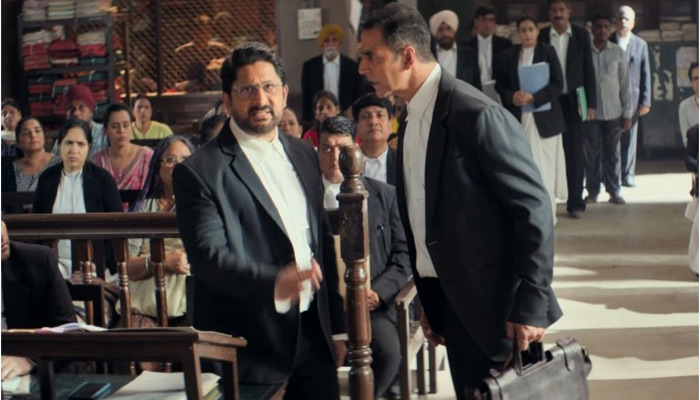
When Reel Meets Real: Jolly LLB 3 in the Dock.
Bollywood has long had a flair for courtroom drama—who can forget Sunny Deol’s thunderous “tareekh pe tareekh” in Damini? The Jolly LLB franchise, known for its satirical take on India’s legal system, has carried that tradition forward. But with Jolly LLB 3, releasing September 19, the courtroom comedy has itself become a defendant in real courts.
The film, starring Akshay Kumar and Arshad Warsi, faces a string of legal challenges. Lawyers and bar associations have filed Public Interest Litigations (PILs), claiming the film demeans judges and lawyers. In Patna, a petition objected to slang like “mama” for judges, alleging it erodes public trust in the judiciary. The plea even demanded edits be cleared by the Bar Council of India and sought a public apology. In Pune, advocates have sought a pre-release injunction, with the court issuing summons to Kumar, Warsi, and director Subhash Kapoor to appear in person on October 28.
This isn’t new for the franchise. In 2024, the Ajmer District Bar Association attempted to block filming on similar grounds. Once again, the lawyers’ defence is not just of a profession—but of dignity.
PILs: India’s unique legal innovation
The Jolly LLB 3 case has reignited debate on PILs themselves—one of India’s most radical judicial innovations. Emerging in the late 1970s and ’80s, PILs were designed to give voice to those too poor or marginalised to access courts. Landmark cases like Hussainara Khatoon (right to speedy trial), Vishaka (sexual harassment guidelines), and MC Mehta (environmental protections) were all born of PILs.
As Justice Krishna Iyer put it, “Procedure is but a handmaiden of justice. The poor shall not be priced out of the system because of the law’s fineries.” PILs turned constitutional ideals into tangible rights.
From empowerment to overuse
Yet the openness that made PILs revolutionary also made them prone to abuse. Today, petitions are filed as often for publicity and politics as for genuine causes. The Supreme Court has repeatedly warned against “Publicity Interest Litigation” and “Private Interest Litigation.” Former CJI N.V. Ramana called frivolous PILs “a new form of abuse of process.”
The numbers underline the strain: with over 50 million cases pending, every misdirected PIL diverts judicial time from matters of liberty and livelihood. Some also push courts into policymaking, raising questions of judicial overreach.
The irony of Jolly LLB 3
That tension is captured in the current controversy. Should scarce judicial hours be spent on whether a film trailer offends lawyers? To many, these PILs trivialise a tool meant to fight child labour, pollution, hunger, and systemic injustice. To the petitioners, however, their professional dignity feels worth defending.
This duality is the story of PILs in India. They remain one of the most democratising tools in the legal system—responsible for freeing bonded labourers, securing midday meals in schools, and exposing corruption. But they are also increasingly wielded to censor art, settle scores, or grab headlines.
As courts weigh the fate of Jolly LLB 3, the irony is striking: a courtroom comedy is now on trial in a real courtroom. On screen, Akshay Kumar and Arshad Warsi play lawyers sparring with wit. Off screen, they stand as respondents to real summons. The line between reel and real has blurred, and in this case, the verdict will decide not just the future of a film—but the freedom of satire itself.
Comments are closed.