

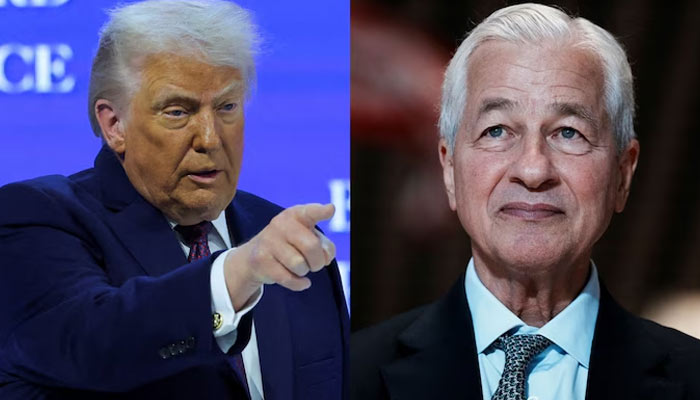
JPMorgan Chase has, for the first time, acknowledged that it closed the bank accounts of former President Donald Trump and several of his businesses following the January 6, 2021, attack on the US Capitol.
The admission comes amid Trump’s ongoing legal battle with the nation’s largest bank over what has become known as the “debanking” issue. The acknowledgment appeared in a court filing submitted this week in Trump’s $5 billion lawsuit against JPMorgan and its CEO, Jamie Dimon. Trump alleges that the bank closed his accounts for political reasons, causing disruption to his business operations.
“In February 2021, JPMorgan informed Plaintiffs that certain accounts maintained with JPMorgan’s CB and PB would be closed,” the filing stated, referring to the bank’s commercial and private banking divisions. Until now, JPMorgan had never formally admitted in writing that it closed the president’s accounts after January 6.
Trump originally filed the lawsuit in Florida state court, where he currently resides, claiming trade libel and violations of state and federal unfair and deceptive trade practices. The recent filings are part of the bank’s efforts to move the case to federal court in New York, where the accounts were held and much of Trump’s business was conducted.
The lawsuit alleges that Trump sought explanations directly from Dimon after receiving account closure notices, but the CEO failed to provide clarification. Trump’s lawyers also claim that JPMorgan placed him and his companies on a reputational “blacklist,” a practice the president’s legal team says prevents clients from opening accounts at other banks. JPMorgan has stated it will respond if the term is further defined.
While JPMorgan maintains that the lawsuit lacks merit, Trump’s team called the bank’s acknowledgment a “devastating concession” that validates their claims. “President Trump is standing up for all those wrongly debanked by JPMorgan Chase and its cohorts, and will see this case to a just and proper conclusion,” the statement said.
Debanking—when banks close customer accounts or refuse services—is increasingly a politically charged topic. Conservatives have alleged that banks have denied them services under vague claims of “reputational risk,” a practice regulators have recently moved to limit. Similar claims have been made against other financial institutions, including Capital One, which faces a separate lawsuit from the Trump Organization filed in March 2025.
This development marks a significant moment in the ongoing debate over the intersection of politics, banking, and financial access in the United States.
Comments are closed.