
Judiciary Has No Power to Remove Judges, That’s Legislature’s Role: Varma Tells Supreme Court

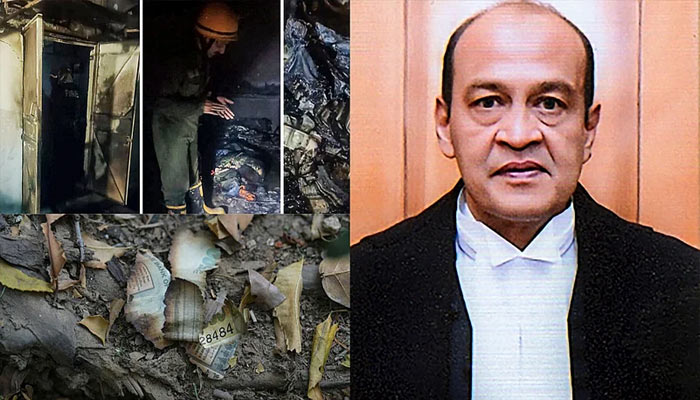
Justice Yashwant Varma Challenges Removal Recommendation, Says Only Parliament Can Decide.
Justice Yashwant Varma has moved the Supreme Court challenging the recommendation of an in-house inquiry panel that called for his removal following the controversy involving charred currency notes found at his official residence in New Delhi earlier this year.
In his petition, Justice Varma argued that the panel’s recommendation—forwarded by the Chief Justice of India (CJI) to the President and Prime Minister—violates constitutional provisions. He maintains that only Parliament, through a formal impeachment process under the Judges (Inquiry) Act, 1968, has the authority to remove a judge.
‘Violation of Separation of Powers’
Justice Varma contended that the judiciary has overstepped its constitutional bounds by recommending his removal. “The Supreme Court cannot assume or share the removal power that the Constitution explicitly assigns to the legislature,” his plea stated, arguing that such a move breaches the basic structure of the Constitution, particularly the principle of separation of powers.
He also challenged the validity of the in-house inquiry procedure itself, stating that it lacks legislative sanction and appropriate checks and balances. “The CJI cannot act as the arbiter of a fellow judge’s removal without judicial or legislative due process,” the petition read.
Objection to In-House Mechanism
The petition highlights several concerns about the in-house mechanism used to assess allegations against judges:
Lacks formal complaint: The process was initiated despite no official complaint being filed against him.
Enables punitive outcomes without legislative oversight: This undermines the constitutionally mandated safeguards for judicial tenure.
Erodes public confidence: By centralising power within the judiciary without transparency or procedural fairness.
Violates judicial independence: By blurring the lines between internal disciplinary mechanisms and constitutionally defined procedures.
Justice Varma also referred to the Supreme Court’s earlier judgment in C. Ravichandran Iyer v Justice AM Bhattacharjee (1995), asserting that the in-house process cannot be used to bridge the gap between “bad conduct” and “proved misbehaviour” required for removal under Article 124(4).
Protest Against Public Disclosure
The petition further criticises the Court’s decision to release the internal inquiry report publicly, claiming it subjected him to “a media trial” and harmed his reputation without due process.
No Supervisory Power Over Judges
Justice Varma has asked the Supreme Court to declare the CJI’s letter to the executive unconstitutional. He also argued that the Constitution does not confer any disciplinary or supervisory powers on the Supreme Court or the CJI over High Court judges. Therefore, any self-regulatory mechanism—such as the in-house procedure—cannot override or dilute the tenure protections granted by the Constitution.
He has urged the Court to set aside the recommendation and reaffirm the role of Parliament as the sole authority for initiating removal proceedings against judges.
Comments are closed.