
Medical Emergency Forces NASA to Recall Astronaut from Space Station

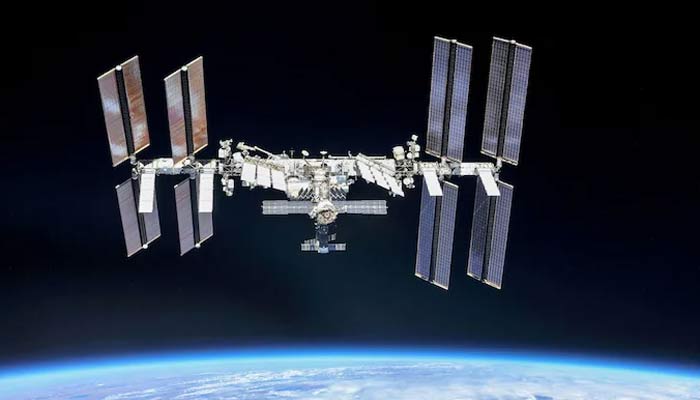
Medical Emergency Forces NASA to Cut ISS Mission Short, Spacewalk Postponed.
NASA has indefinitely postponed a planned spacewalk outside the International Space Station (ISS) after a medical issue arose with an unidentified crew member on Wednesday, January 7, 2026. The agency confirmed that the astronaut will be brought back to Earth “in the coming days,” marking the first time in 25 years that a mission has been shortened due to a medical emergency.
The situation is reportedly stable, and NASA emphasized that crew safety takes precedence over mission objectives. Details about the astronaut’s condition and identity remain undisclosed due to medical privacy protocols.
Planned Spacewalk and Objectives
The spacewalk, US 94, was scheduled for Thursday morning and would have lasted approximately 6.5 hours. Astronauts Mike Fincke and Zena Cardman were tasked with preparing the ISS’s 2A power channel for the installation of the final pair of roll-out solar arrays (iROSAs), which will enhance the station’s power supply for operations and its eventual deorbit in roughly five years.
The astronauts also planned to swab five sites near the Quest airlock to study microbial contamination risks in microgravity.
Mission Implications
The delay affects the first of two spacewalks planned for January, with US 95 scheduled for January 15 to carry out camera replacements, navigational aid installations, and fluid system upgrades. NASA took ISS live feeds offline shortly before the announcement, underscoring the seriousness of the situation.
The agency is evaluating options, including an early end to the SpaceX Crew-11 mission. “Safely conducting our missions is our highest priority, and we are actively evaluating all options,” NASA said, adding that updates on the astronaut’s condition and the rescheduled spacewalk will follow within 24 hours.
Context
Medical emergencies in space, though rare, highlight the unique challenges of microgravity, such as fluid shifts and clot risks. With upcoming departures of the SpaceX CRS-33 Dragon on January 21 and Japan’s HTV-X on January 28, mission timelines for station maintenance are increasingly tight. NASA reassured the public that onboard medical capabilities remain robust and monitoring continues.
Comments are closed.