
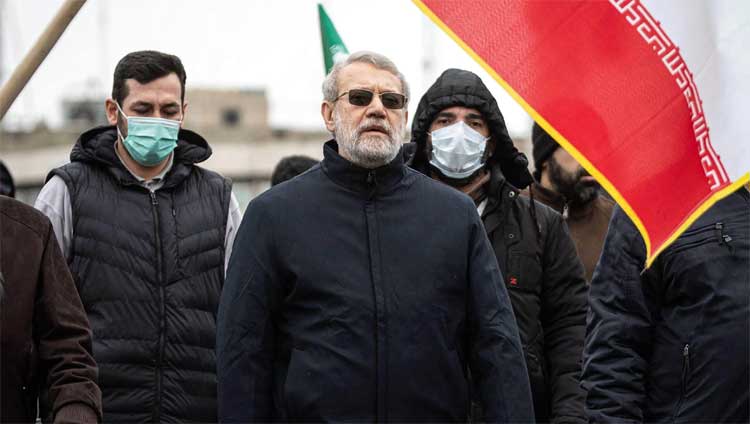
Netanyahu says Israel killed Iran’s Ali Larijani, vows continued operations against regime

A wave of drone and rocket attacks targeted the US embassy in Baghdad on Tuesday, in what Reuters described as the most intense assault so far, involving at least five drones.
The escalation came amid a widening regional conflict, with the United States and Israel striking military targets in Tehran, while Israel also intensified operations against Iran-backed militants in Lebanon. Iran, in turn, launched a drone strike that briefly shut down Dubai’s airport, a key global travel hub.
Oil and gas crisis
Concerns over a global energy crunch deepened as shipping slowed through the Strait of Hormuz, which typically carries about a fifth of the world’s oil. Iranian attacks—and the threat of further strikes—have disrupted commercial traffic, pushing oil prices higher and increasing pressure on Washington to stabilise markets.
Benchmark Brent crude remained above $100 a barrel. US President Donald Trump said he had urged several countries to deploy warships to secure the Strait, though no immediate commitments were announced.
Indian vessels navigate Hormuz
India’s LPG carrier Nanda Devi, transporting around 45,000 metric tonnes of gas, safely reached Vadinar port in Gujarat after crossing the Strait. Another Indian-flagged tanker, Shivalik, had arrived a day earlier at Mundra Port with a similar consignment.
Iran’s stance on Hormuz and war
Iranian Foreign Minister Abbas Araghchi said the Strait remains open—but not for the US, Israel and their allies. He also dismissed suggestions of negotiations, calling them “delusional” and asserting that Iran is seeking neither a truce nor talks.
Since US-Israeli strikes on Iran more than two weeks ago, Tehran has repeatedly launched drones and missiles at Israeli territory, American bases, and energy infrastructure in Gulf Arab states. On Tuesday, Israel reported another barrage of Iranian missiles near the Sea of Galilee, though no injuries were reported.
Nuclear sites and continued strikes
Araghchi said nuclear materials at Iranian facilities are now buried under rubble following recent attacks and could only be recovered under supervision from the International Atomic Energy Agency.
Meanwhile, powerful explosions were heard in Beirut as Israel launched fresh strikes targeting infrastructure linked to Hezbollah. The group has been firing rockets into northern Israel since late February, further intensifying the multi-front conflict.
Comments are closed.