
New US Remittance Law: How NRIs to India Are Affected by ‘One Big, Beautiful Bill’

Explained: How the ‘One Big, Beautiful Bill’ Will Impact NRIs Sending Money to India.
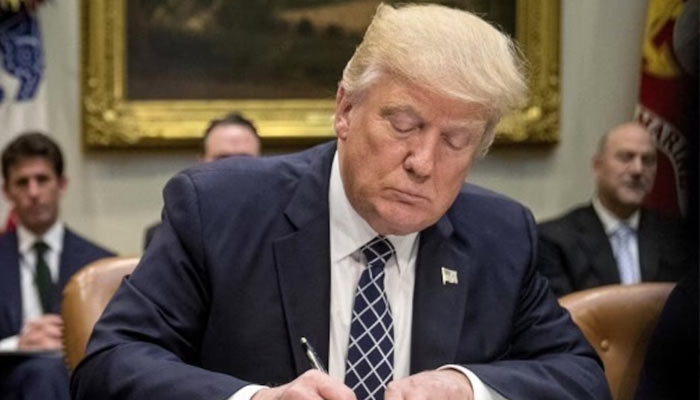
Despite widespread protests and sharp opposition, the controversial ‘One Big, Beautiful Bill Act’, championed by US President Donald Trump, has officially become law. Signed on July 4 during Independence Day celebrations at the White House, the new law ushers in sweeping reforms across taxation, welfare, defence, and cultural policy.
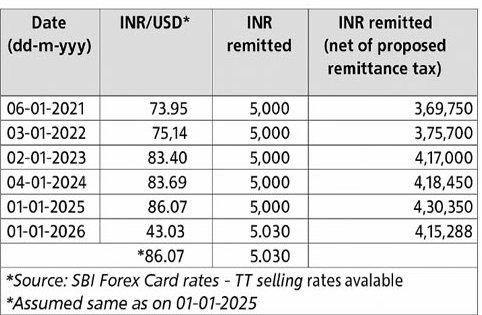
One key provision in the law is already raising concerns within the Indian diaspora in the US — a 3.5% excise tax on remittances. This provision, originally proposed at 5%, applies to NRIs residing in the US on H1B, L1, F1 visas, and even Green Card holders, making it significantly more expensive to send money back home to India.
How It Affects NRIs
Many Indian-origin US residents regularly send money to support families in India. With this new tax, they will now have to pay an additional charge on every dollar remitted — a move experts say may discourage regular remittances.
“This tax will significantly affect Indian immigrants who send money to support families in India,” said Bikramjit Bedi, Partner – Taxation at ASA & Associates LLP.
This could have ripple effects on India’s economy. According to RBI data, India received nearly $33 billion in remittances from the US in FY24, accounting for 28% of the total $118.7 billion received. A dip in these funds may affect household incomes, savings, and consumption in India.
Legal Loopholes and Compliance Challenges
Experts have also flagged several unanswered legal and compliance questions:
It’s unclear whether taxpayers can claim credit for the excise tax under the India-US Double Taxation Avoidance Agreement (DTAA).
While India levies TCS (Tax Collected at Source) on certain foreign remittances, it also provides exemptions based on purpose — unlike the US law.
The US tax may not fall under the DTAA’s protection, since it is an excise tax, not an income tax.
“This creates a grey area on whether the tax violates the DTAA’s non-discrimination clause,” said Bedi.
Additional Burden on Temporary Residents
NRIs working or studying in the US on temporary visas may feel the squeeze most. They rely heavily on remittances to support their families.
“The tax could impose not only financial strain but also increase paperwork and regulatory scrutiny,” said Deepashree Shetty, Partner – Global Employer Services, BDO India.
She explained that banks might now have to collect and report more detailed data — including remitter nationality, remittance amounts, and tax paid — which could result in delays and higher administrative burden.
Bottom Line
With the ‘One Big, Beautiful Bill Act’ now law, the cost of sending money to India has gone up for NRIs. For families in India that depend on these funds, the change may result in tighter budgets and fewer inflows. Meanwhile, legal experts continue to debate whether this new tax oversteps the US’s obligations under international tax treaties.
Comments are closed.