
Over 400 Kg of Uranium Missing in Iran; US Uncertain About Status of Nuclear Sites

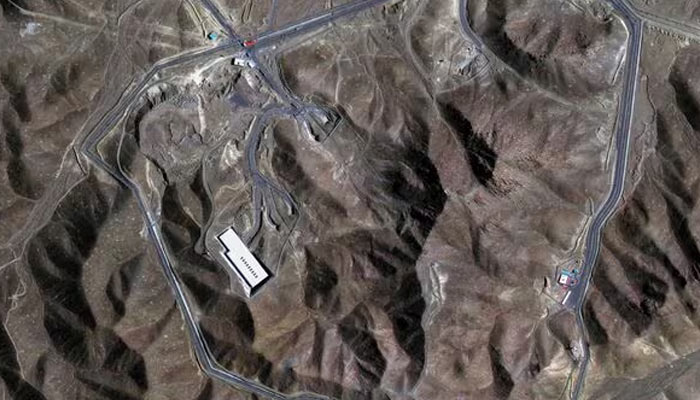
The fate of over 400 kilograms (approximately 880 pounds) of enriched uranium in Iran remains uncertain following recent U.S. and Israeli strikes on the country’s nuclear facilities, U.S. Vice President JD Vance said.
Vance acknowledged that the extent of the damage to Iran’s nuclear infrastructure is still being assessed, saying the sites were likely “severely damaged or obliterated,” but added that he was “not exactly sure.” Nonetheless, he emphasized that Iran’s nuclear program had suffered a significant setback.
The remarks come after U.S. President Donald Trump authorized airstrikes targeting key Iranian nuclear sites, part of a coordinated response involving Israel. According to the New York Times, Iran had enriched around 880 pounds of uranium to 60 percent purity—short of the 90 percent needed for weapons-grade material—before the attacks. Much of this was reportedly stored at the Isfahan facility.
When asked about the status of Iran’s stockpile, Vance said the administration would “work in the coming weeks” to address the fate of the enriched uranium, suggesting that talks with Iran on the issue are being considered.
Vance confirmed that the primary goal of the U.S. strike was to destroy the Fordow enrichment facility, a heavily fortified site built into a mountain. “That was the objective of the mission—to destroy the Fordow nuclear site and inflict damage on others,” he said. “We feel very confident that Fordow was substantially set back.”
Late last week, Israeli strikes reportedly targeted three major nuclear sites—Natanz, Isfahan, and Fordow—resulting in the deaths of several Iranian nuclear scientists. The full extent of the damage remains unclear due to the underground nature of many of the sites.
On Sunday, the U.S. deployed its largest conventional bunker-buster bombs against Iran’s fortified nuclear facilities. According to a Reuters report, the bombing likely inflicted “very significant” damage, particularly at Fordow, though the precise condition of the underground enrichment halls remains unknown.
Meanwhile, Iran informed the International Atomic Energy Agency (IAEA) on June 13 that it would implement “special measures” to safeguard its nuclear materials and equipment, which are under IAEA supervision as part of the Nuclear Non-Proliferation Treaty.
Comments are closed.