
Quad Leaders Hold Key Meeting Today, Send Strategic Message to China Ahead of US-Russia Talks

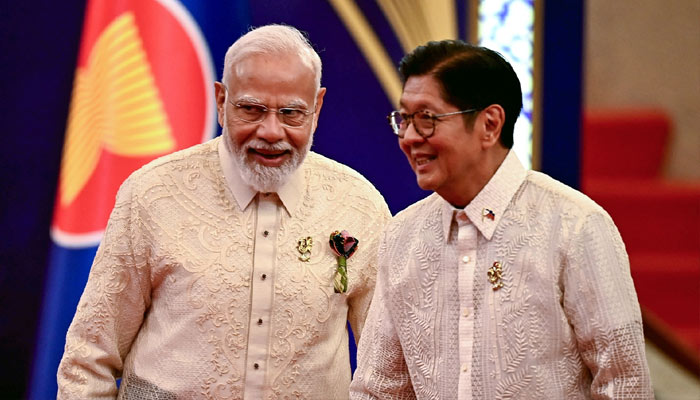
Quad Leaders to Meet in Manila: Modi, Trump, Takaichi and Albanese Set to Discuss Indo-Pacific Security and China
Leaders of the four-nation Quad grouping — Prime Minister Narendra Modi, US President Donald Trump, Japanese Prime Minister Sanae Takaichi and Australian Prime Minister Anthony Albanese — are scheduled to hold a meeting in Manila on Tuesday. The discussions will take place on the sidelines of the ASEAN and East Asia summits, marking Trump’s first participation in a Quad leaders’ meeting since returning to the White House in January 2025.
The meeting is expected to focus on regional security, economic cooperation and maintaining peace and stability across the Indo-Pacific. It also comes at a significant diplomatic moment, ahead of Trump’s scheduled interactions with Chinese President Xi Jinping and Russian President Vladimir Putin in Shenzhen on November 19, on the sidelines of the Asia-Pacific Economic Cooperation (APEC) summit.
White House Highlights Quad’s Role in Indo-Pacific
Confirming Trump’s participation, Olivia Wales, Assistant Press Secretary at the White House, said the US President would attend a multilateral meeting with Quad leaders on Tuesday evening.
She said the discussions would focus on shared priorities relating to peace, prosperity and security in the Indo-Pacific region.
Wales also described the Quad as a partnership focused on practical cooperation, adding that the grouping had been working to address regional challenges and promote a free and open Indo-Pacific under Trump’s leadership.
China Likely to Feature in Discussions
The Manila meeting is being viewed as an opportunity for the four countries to reaffirm the strategic importance of the Quad, particularly amid concerns over China’s growing military and maritime activities in the Indo-Pacific.
According to sources, the timing of the meeting is significant as it precedes Trump’s planned engagement with Xi Jinping and Vladimir Putin in Shenzhen. The discussions could provide an opportunity for the Quad partners to share their concerns about China’s regional conduct before the US President’s meeting with the Chinese leader.
The four countries have consistently highlighted maritime security and freedom of navigation as important priorities in the Indo-Pacific. Beijing, which has opposed the grouping, has criticised the Quad’s strategic role in the region.
Trump revived the Quad framework in 2017, but his administration’s approach towards China has generated mixed assessments. The National Security Strategy under his second presidency has faced criticism over what some observers describe as a softer approach towards Beijing, although the US administration has rejected that interpretation.
Sources also indicated that the Manila meeting could conclude with a fact sheet outlining areas of cooperation and specific initiatives agreed upon by the four leaders.
First Quad Leaders’ Meeting Since September 2024
The previous Quad leaders’ summit was held in September 2024 in Wilmington, Delaware, where then US President Joe Biden hosted Modi and the leaders of Japan and Australia.
India was originally scheduled to host the gathering that year but exchanged hosting responsibilities with the United States to allow Biden to convene the meeting during his final year in office.
New Delhi was subsequently expected to organise the 2025 summit. However, differences between India and the US over tariffs, visa restrictions, deportations and Washington’s engagement with Pakistan affected the diplomatic atmosphere.
Relations have since shown some improvement, with Quad foreign ministers holding multiple meetings. India is now expected to host the leaders’ summit in 2026, although the hosting arrangement could still change.
Another notable aspect of Tuesday’s meeting is its location. For the first time since the Quad was elevated to the leaders’ level in 2021, all four leaders will meet in a country that is not part of the grouping.
Modi Arrives in Philippines for ASEAN and East Asia Summits
Prime Minister Narendra Modi arrived in the Philippines on Monday to participate in the 23rd ASEAN-India Summit and the 21st East Asia Summit.
The Ministry of External Affairs said the visit reflects India’s commitment to strengthening its partnership with ASEAN, which remains a central pillar of its Act East Policy and Indo-Pacific vision.
In his departure statement, Modi highlighted the importance of India’s longstanding relations with Southeast Asian countries, noting that cooperation has expanded across trade, connectivity, maritime security, technology and people-to-people exchanges.
He also emphasised the role of the East Asia Summit as an important platform for discussing regional and international challenges.
Modi said he looked forward to working with fellow leaders to strengthen the Comprehensive Strategic Partnership between India and ASEAN and advance common goals relating to economic growth, connectivity and prosperity.
MAHASAGAR Vision and India’s ASEAN Partnership
Modi also highlighted the importance of ASEAN in India’s broader MAHASAGAR vision, which stands for Mutual and Holistic Advancement for Security and Growth Across Regions.
The framework reflects India’s expanded approach to maritime cooperation, regional connectivity and security partnerships.
The Prime Minister expressed confidence that his visit would give fresh momentum to India’s engagement with ASEAN and strengthen collective efforts towards a peaceful, stable and prosperous Indo-Pacific. He also looked forward to meeting members of the Indian community living in the Philippines.
Established in 1967, ASEAN now has 11 member countries: Brunei, Cambodia, Indonesia, Laos, Malaysia, Myanmar, the Philippines, Singapore, Thailand, Timor-Leste and Vietnam.
India, along with the United States, China, Japan and Australia, is among the grouping’s dialogue partners.
The Quad meeting in Manila, therefore, comes against the backdrop of wider regional diplomatic engagements, with maritime security, economic cooperation and the strategic balance in the Indo-Pacific expected to remain important subjects of discussion.
Comments are closed.