
Russell Crowe Slams Gladiator II, Says Sequel Lost What Made Original Special

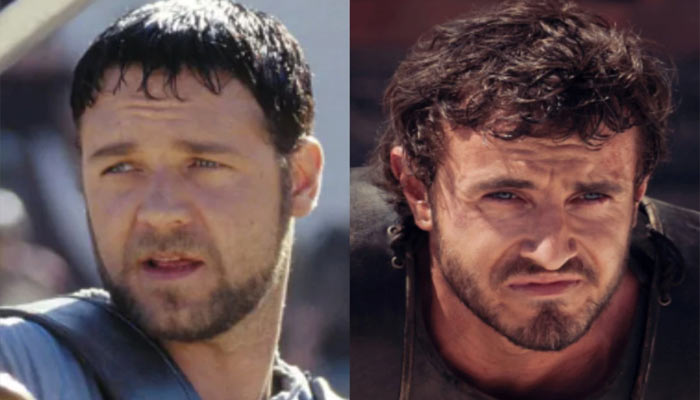
Russell Crowe Says Gladiator II Missed the ‘Moral Core’ That Made the Original a Classic
More than two decades after Gladiator became a global phenomenon, Russell Crowe believes its sequel failed because it misunderstood what made the original resonate with audiences.
Speaking at the Taormina Film Festival, the Oscar-winning actor reflected on the creative choices behind the 2000 epic and argued that Gladiator II lacked the emotional and moral foundation that drove the success of the first film.
Why Crowe Opposed a Romantic Subplot
Crowe revealed that during the production of Gladiator, there was pressure from studio executives and producers to include romantic or sexual relationships involving Maximus, the Roman general he portrayed.
The actor said he consistently opposed those ideas because they conflicted with the central theme of the story.
According to Crowe, Maximus was a man consumed by grief and driven by a singular purpose: avenging the murder of his wife and son. Introducing a romantic relationship during that journey, he argued, would have undermined the character’s motivations and weakened the emotional impact of the narrative.
Crowe added that director Ridley Scott ultimately agreed with his position, and the proposed storyline was dropped from the film.
‘They Didn’t Understand Why It Worked’
Reflecting on the performance of Gladiator II, Crowe suggested that the sequel’s creators failed to recognise the key ingredient behind the original’s enduring appeal.
While discussing the film’s commercial reception, the actor noted that the sequel’s box-office earnings were comparable to those of the first film despite being released more than two decades later in a vastly different movie market.
Crowe argued that the original succeeded not because of spectacle alone, but because it was anchored by a strong moral and emotional narrative.
In his view, that sense of purpose — embodied by Maximus’s quest for justice and loyalty to his family — was what connected most deeply with audiences and elevated the film beyond a standard action blockbuster.
A Tougher Road for the Sequel
Released in 2024, Gladiator II generated significant anticipation but struggled to match the cultural impact of its predecessor.
The film earned approximately $462 million worldwide. However, with a reported production budget of around $310 million, industry analysts viewed its theatrical run as underwhelming relative to expectations.
By comparison, the original Gladiator grossed roughly $466 million globally following its release in 2000 on a much smaller budget estimated at around $100 million.
The sequel reportedly needed substantially higher returns to deliver the kind of profitability typically expected from a modern blockbuster of its scale.
The Legacy of Gladiator
Directed by Ridley Scott, Gladiator follows Maximus, a respected Roman general who is betrayed after the murder of Emperor Marcus Aurelius. Stripped of his status, enslaved and forced into the gladiatorial arena, Maximus embarks on a quest for revenge against Commodus, the emperor responsible for destroying his family.
The film became one of the defining epics of its era, winning five Academy Awards, including Best Picture and Best Actor for Crowe.
Its blend of action, tragedy and emotional storytelling helped transform it into a modern classic that continues to influence historical epics more than two decades later.
About Gladiator II
The sequel shifts focus to Lucius, played by Paul Mescal, who returns to Rome as a prisoner and eventually enters the gladiatorial arena.
The film also features Denzel Washington as Macrinus, a former slave and political strategist with ambitions of reshaping the Roman Empire from within.
Despite strong performances and large-scale action sequences, Crowe believes the sequel struggled because it lost sight of the emotional foundation that made Gladiator such a lasting success.
Comments are closed.