
Sensex Rises 228 Points at Open, Nifty Above 24,800; Nestle Among Top Gainers

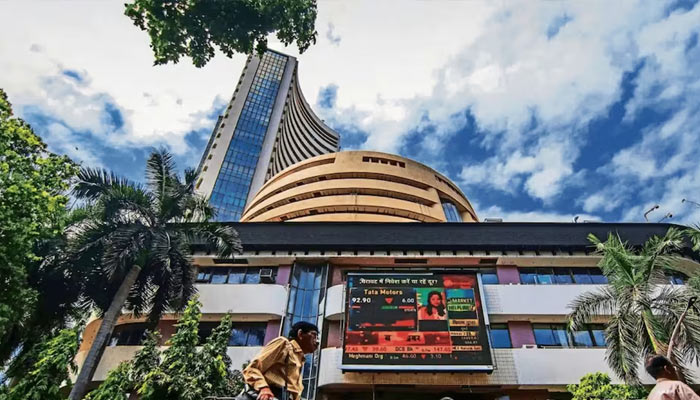
Sensex Surges 749 Points, Nifty Crosses 25,000 as RBI Eases Infra Lending Norms.
Indian equity benchmarks rallied sharply on Friday, buoyed by regulatory reforms from the Reserve Bank of India (RBI) that have boosted optimism around infrastructure lending.
By 12:00 pm, the BSE Sensex had climbed 749.32 points to 82,111.19, while the NSE Nifty50 surged 235.70 points to cross the 25,000-mark, trading at 25,028.95.
RBI’s Policy Shift Sparks Market Optimism
The rally was triggered by the RBI’s announcement of relaxed provisioning norms for under-construction infrastructure projects. The central bank’s updated framework allows banks and non-banking financial companies (NBFCs) to set aside less capital against potential defaults on loans to such projects.
This move is expected to unlock greater lending capacity, particularly in capital-intensive sectors like power, housing, transport, and logistics—a key driver of Friday’s strong gains in financial and infrastructure-related stocks.
Sectoral Leaders & Gainers
Shares of Power Finance Corporation, REC, and IRFC rose sharply during intraday trading. Financials and infrastructure financiers led the surge, with notable contributions from:
- Jio Financial
- Shriram Finance
- Mahindra & Mahindra
JSW Steel
Market heavyweights such as Reliance Industries and State Bank of India also advanced 1–2%, providing additional support to the index rally.
Broader Market Sentiment: Mixed Underneath the Rally
Despite the sharp gains in frontline indices, caution lingers, especially in the broader market. Small- and mid-cap stocks (SMIDs) continue to exhibit weakness, with some names falling by up to 2%.
Dr. VK Vijayakumar, Chief Investment Strategist at Geojit Financial Services, noted:
“The Nifty is likely to remain range-bound between 24,500 and 25,000 in the near term unless there’s a major geopolitical trigger like de-escalation in the Israel-Iran conflict.”
He warned that excessive valuations in SMIDs and a shift towards risk-off sentiment may keep pressure on these segments. Investors, he advised, should consider rotating capital into large-cap stocks across financials, industrials, autos, and real estate, where valuations are more reasonable.
Risks Still Loom
While domestic flows—particularly from institutional investors—are helping cushion the market on dips, geopolitical tensions and global crude oil prices remain key risk factors. A sustained rise in Brent crude above $85/barrel, for instance, could challenge the market’s lower range.
Friday’s rally highlights the market’s positive response to pro-growth policy changes. The RBI’s revised infrastructure lending norms could be a catalyst for renewed credit flow and economic momentum in the infrastructure space. However, global uncertainty, high SMID valuations, and sector-specific concerns may limit near-term upside.
The near-term outlook is optimistic but cautious. While regulatory support has lifted sentiment, investors will be closely watching geopolitical developments and global cues to assess whether this rally has legs—or if it’s just a temporary bounce.
Comments are closed.