
Time to Let the Bat Do the Talking: Suryakumar Yadav Must Show Restraint Off the Field

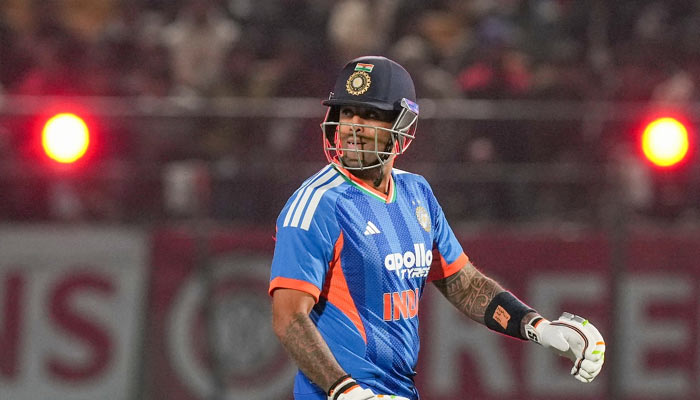
Suryakumar Yadav has repeatedly leaned on one mantra in recent months, almost as if saying it aloud might steady the ground beneath him:
The work is sound, the intent unchanged, and the runs will come. He first voiced this at the Asia Cup press conference in September and reiterated it after the third T20I against South Africa in Dharamsala. Yet, the underlying message has begun to feel uneasy—because the numbers are hard to ignore.
“I’ve been batting beautifully in the nets. I’m trying everything that’s in my control,” Suryakumar said. “When the runs have to come, they will. I’m not out of form, but definitely out of runs.”
He added a sharper tone: “My soldiers, 14 of them, are covering for me for now. They know what will happen the day I blast.” Confident words, yet the reality of his form casts a shadow.
A troubling T20I year
Suryakumar’s T20I record this year has been harsh. In 19 innings, he scored just 218 runs at an average of 13.62, without a single half-century. His highest score, 47, came months ago in the Asia Cup. In the recent home series against South Africa, he managed 34 runs in four innings while India comfortably won the series.
This slump isn’t sudden. Warning signs have appeared since last November in South Africa, where he scored 26 runs in three innings, and continued through the home series against England in January. A brief resurgence in Australia last October was fleeting.
Technically, there’s no glaring flaw. He isn’t getting out to the same delivery, and no shot requires urgent repair. But subtler issues exist: timing against pace has dipped, scoring in front of the wicket is slower, and strokes that once came instinctively now show tiny mistimings. At 35, even minor disruptions matter, especially after a sports hernia surgery earlier this year.
Leadership can’t mask poor form forever
Expectations add invisible weight. As captain and one of India’s most celebrated T20 batters, each low score carries extra scrutiny. Recent dismissals suggest he’s occasionally forcing shots instead of letting innings develop naturally. Preparation hasn’t been the issue—he has spent long hours in the nets—but output has lagged.
Ordinarily, his numbers would prompt selection questions. Yet India keeps winning, and others have stepped up, allowing him time. But words alone no longer suffice. Defiant statements and public proclamations risk amplifying the gap between talk and runs.
Cricket, in the end, is simple: runs silence everything. Explanations do not.
Suryakumar remains one of India’s greatest T20 match-winners, second only to Jasprit Bumrah in game-changing ability. His peak was extraordinary, recent enough to matter. But credibility is earned ball by ball, not declared.
With only one T20I series left before the World Cup—against New Zealand from January 21 to 31—this is Suryakumar’s final window to fix his form. Whether he bats at No. 3 or No. 4 is secondary. Method is irrelevant. Output is everything.
India opens its World Cup campaign against the United States on February 7, with the clash against Pakistan looming on February 15. To regain control of his narrative, Suryakumar must focus on the unglamorous path: less noise, fewer proclamations, more runs. It is time to let the bat do the talking.
Comments are closed.