

In a landmark shift, Japan has stepped decisively away from the pacifist path it followed after World War II.
The government has lifted long-standing restrictions on the export of lethal weapons, allowing Japanese defence firms to sell missiles, fighter jets, and other military systems abroad. For a country that built its post-war identity on restraint—shaped by the devastation of the conflict and the atomic bombings—this marks a profound recalibration of both policy and global posture.
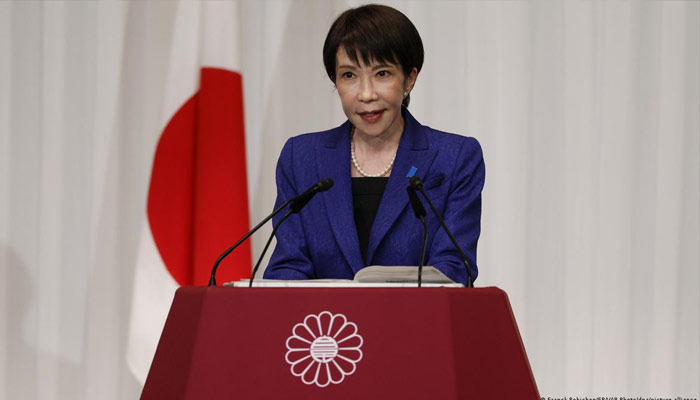
The new guidelines, approved under Prime Minister Sanae Takaichi, divide defence equipment into two categories: “weapons” (lethal systems such as warships, tanks, and missiles) and “non-weapons” (nonlethal gear like radar systems and protective equipment). Crucially, exports of lethal systems are now permitted under strict conditions tied to national security, alliances, and international norms.
What is Japan’s new policy?
Japan has moved from a near-total ban on arms exports to a controlled, case-by-case system. Under the revised framework, lethal equipment—including advanced fighter aircraft, missiles, and naval platforms—can now be exported if approved by the government based on national-security interests, human-rights considerations, and alignment with allies.
This builds on earlier, limited relaxations but goes significantly further by explicitly allowing the export of lethal weapons—something previously off-limits.
The shift also enables Japan to participate more fully in joint defence projects, such as its next-generation fighter programme with European partners, instead of being restricted to supplying only nonlethal components.
Takaichi has framed the move as a strategic evolution rather than a return to militarism, saying it will strengthen deterrence while ensuring Japan contributes more meaningfully to global stability.
What defined Japan’s post-war policy?
Japan’s post-war approach was rooted in a deep aversion to militarism. At its core was Article 9 of the 1947 Constitution, which renounced war and prohibited maintaining traditional military forces.
Although Japan established the Self-Defence Forces, their role remained strictly defensive. Security was largely underwritten by the US-Japan Security Treaty, with the United States providing extended protection.
A strict arms export ban, formalised in 1976, further reinforced this stance by prohibiting weapons sales to conflict zones and certain categories of states. Over time, this evolved into a near-total ban, with only limited exceptions for nonlethal equipment.
This framework supported Japan’s “peace state” model—prioritising economic growth, diplomacy, and stability over military expansion—helping it emerge as a global economic powerhouse.
Why is Japan changing course now?
Several converging pressures have driven this shift.
A more dangerous neighbourhood: Rising military assertiveness by China in the Indo-Pacific and advancing missile and nuclear capabilities of North Korea have heightened Japan’s security concerns.
Lessons from the war in Europe: The Russia-Ukraine War has underscored the importance of resilient defence supply chains among allies. Japan increasingly sees participation in these networks as both necessary and strategic.
Strain on US guarantees: While ties with the United States remain central, Tokyo recognises the limits of relying solely on Washington amid multiple global crises, including tensions in West Asia.
Economic and industrial realities: Japan’s defence industry has long struggled with limited domestic demand. Opening exports expands markets, sustains advanced manufacturing, and preserves cutting-edge technological capabilities.
A broader strategic shift
Ultimately, this policy marks Japan’s transition from a largely passive, US-dependent security actor to a more proactive contributor to regional and global stability.
Takaichi has linked the change directly to deterrence and alliance-building, arguing that Japan must be able to share advanced systems with partners. She has also emphasised that sustaining a modern defence industry requires access to international markets—something impossible under the previous restrictions.
While the government insists that strict oversight will remain, the move signals a clear break from decades of self-imposed limits—and the emergence of a more assertive Japan on the global stage.
Comments are closed.