
Trump presses allies to send warships to keep Strait of Hormuz open amid Iran war

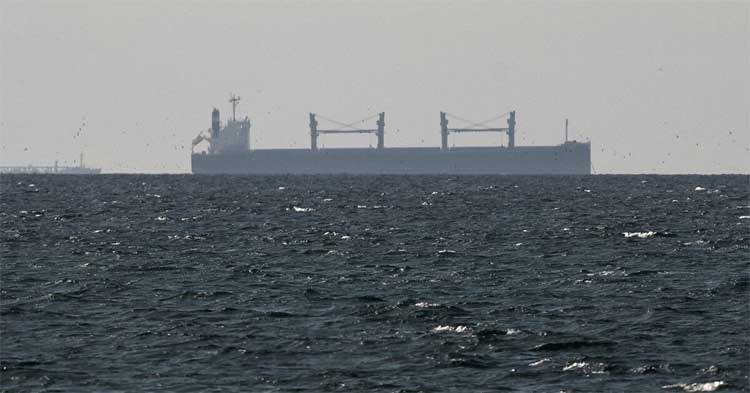
Donald Trump said Sunday he has urged about seven countries to deploy warships to help keep the Strait of Hormuz open, warning that NATO faces a “very bad” future if US allies refuse to help secure the crucial oil transit route during the war with Iran.
The US president said his appeals have so far produced no firm commitments even as global oil prices surge amid fears that the strait — through which roughly one-fifth of the world’s traded oil normally flows — could remain effectively shut.
“I’m demanding that these countries come in and protect their own territory, because it is their own territory,” Trump told reporters aboard Air Force One while flying back to Washington from Florida. Trump argued the United States itself is less dependent on the strait because of domestic energy production, while major Asian economies rely heavily on Gulf crude.
He said China receives about 90% of its oil via the waterway, while the US imports only a minimal amount through it. Trump declined to say whether Beijing had agreed to join any coalition. “It would be nice to have other countries police that with us, and we’ll help. We’ll work with them,” he said. In recent days, Trump has publicly appealed to China as well as France, Japan, South Korea and United Kingdom.
Meanwhile, Iran’s Foreign Minister Abbas Araghchi said Tehran had been approached by several countries seeking safe passage for their vessels. “We have been approached by a number of countries, and this is up to our military to decide,” Araghchi told CBS, adding that ships from “different countries” had already been allowed through, though he did not provide details.
Iran has said the strait remains open to all shipping except that linked to the United States and its allies.
Araghchi also dismissed prospects for direct talks with Washington to end the conflict, accusing the US and Israel of starting the war with coordinated attacks on February 28 during indirect negotiations over Iran’s nuclear program. He added that Tehran has “no plan to recover” enriched uranium buried under rubble following US and Israeli strikes last year.
Trump warns NATO allies
In an interview with the Financial Times, Trump said Europe should help secure the strait just as the United States has supported Ukraine in its war with Russia. “If there’s no response or if it’s a negative response, I think it will be very bad for the future of NATO,” he said, repeating his long-standing criticism that the alliance relies too heavily on US military power.
Trump also suggested a planned summit with Chinese President Xi Jinping in Beijing could be delayed if China does not assist efforts to reopen the waterway. “We’d like to know before,” Trump said, noting that many countries depend far more than the United States on oil flowing from the Gulf.
Asked what assistance he wanted from allies, Trump said the coalition would need minesweepers as well as forces capable of confronting “bad actors” operating along the Iranian coast.
Allies cautious about involvement
Despite Trump’s calls, countries have responded cautiously.
British Prime Minister Keir Starmer discussed the issue with Trump on Sunday and stressed the importance of reopening the strait to restore global shipping flows, according to London. Trump later said Starmer had initially declined to place British aircraft carriers “into harm’s way.”
“Whether we get support or not, I can say this — we will remember,” Trump told reporters. China’s embassy in Washington said all parties share responsibility for ensuring stable energy supplies and that Beijing would continue communication with relevant countries to reduce tensions.
South Korea’s Foreign Ministry said it was reviewing the situation with the United States, while Japan is expected to discuss the issue when Prime Minister Sanae Takaichi meets Trump at the White House later this week. France has said it is working with partners in Europe, India and Asia on a possible international mission to escort ships through the strait but stressed such a deployment would depend on conditions improving.
Germany ruled out participation. Foreign Minister Johann Wadephul told ARD television: “Will we soon be an active part of this conflict? No.”
Oil markets rattle as war drags on
Uncertainty about the duration of the conflict has rattled global energy markets. US benchmark West Texas Intermediate crude rose 2.5% on Sunday to $100.22 per barrel, while Brent crude climbed 2.9% to $106.11.
The International Energy Agency said emergency oil reserves would soon be released to stabilize markets, expanding a previously announced plan from 400 million barrels to nearly 412 million — the largest coordinated stock release ever.
Asian members will begin releasing supplies immediately, while Europe and the Americas are expected to follow by the end of March.
Missile strikes continue across the region
The conflict has continued to escalate across the Middle East. Gulf countries including Saudi Arabia, Kuwait and Bahrain reported new Iranian missile or drone attacks a day after Tehran warned three major ports in the United Arab Emirates to evacuate.
Iran accuses the UAE of allowing the US to launch strikes from its territory against Kharg Island, Iran’s main oil export terminal — an allegation Abu Dhabi denies. Tehran has threatened to target US-linked “oil, economic and energy infrastructure” if its own facilities continue to be attacked.
War’s toll rises
The humanitarian toll across the region is mounting. Iranian missile strikes have killed at least a dozen civilians in Gulf countries, many of them migrant workers. Inside Iran, the International Committee of the Red Cross estimates more than 1,300 people have been killed. Iranian authorities say 223 women and 202 children are among the dead.
In Israel, Iranian missile attacks have killed 12 people and injured many more. The US military has also lost 13 service members, including six killed in a plane crash in Iraq last week. Fighting has also spread into Lebanon, where more than 820 people have died since Iran-backed Hezbollah attacked Israel and Israel responded with airstrikes and ground operations in southern Lebanon.
More than 800,000 people — nearly one in seven residents of Lebanon — have been displaced in just 10 days.
New missile strikes hit Israel
Early Monday, Israel’s military said Iran launched another wave of missiles toward the country. Several strikes hit central Israel and the Tel Aviv area, damaging buildings at 23 sites and igniting fires. Israel’s emergency service Magen David Adom released video showing a large crater in a street and shrapnel damage to nearby apartments.
Israel says Iran is now using cluster-type munitions designed to evade air defenses and scatter multiple submunitions across wide areas.
Comments are closed.