

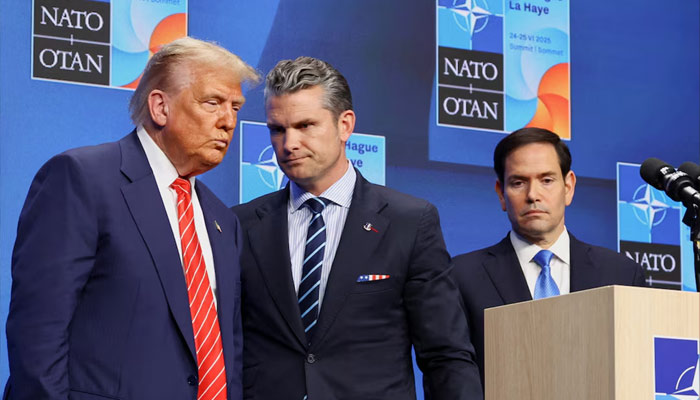
Trump’s Pressure on European Leaders Deepens Transatlantic Unease
Weeks of escalating exchanges between US President Donald Trump and European leaders have added fresh strain to already fragile transatlantic relations, raising concerns in European capitals over the future of the partnership.
Trump recently criticised German Chancellor Friedrich Merz over his comments on the Iran conflict, calling him “totally ineffective.” The remarks were followed by a Pentagon announcement that the US would reduce its troop presence in Germany by around 5,000 personnel, while also signalling higher tariffs on European Union vehicle imports — a move expected to hit Germany’s auto sector hardest.
In the United Kingdom, Trump also targeted Prime Minister Keir Starmer, describing him as “not Winston Churchill” and warning of potential tariffs on British goods.
The US administration has also reportedly discussed steps that could affect NATO allies, including proposals to suspend Spain from certain arrangements and reassess strategic recognitions involving UK territories — developments that have unsettled European policymakers.
“It’s unnerving to say the least. We are braced for anything, anytime,” one European diplomat said, reflecting the growing uncertainty within diplomatic circles.
Europe reassessing strategy amid repeated tensions
The latest remarks and policy signals come after earlier disputes over tariffs, US aid to Ukraine, and proposals involving Greenland, all of which had already strained relations between Washington and European capitals.
Some European leaders, including Merz, Starmer, and Italian Prime Minister Giorgia Meloni, have attempted to stabilise ties through engagement and policy alignment with Washington. However, renewed tensions linked to the Iran conflict have once again placed several of them under direct criticism from Trump.
Even NATO Secretary General Mark Rutte reportedly faced a sharp exchange during a recent White House meeting, underscoring the unpredictability of the current phase in US–Europe relations.
While European diplomats say they remain committed to the transatlantic alliance, they acknowledge a shift in approach.
“We can’t rely anymore on the post-World War status quo… we need to be not only a soft power space, but also backed by power,” one Western diplomat said, noting accelerated efforts across Europe to strengthen defence capabilities.
Mixed reactions inside the US
Within the United States, some political figures have also questioned the approach. Republican lawmaker Don Bacon criticised potential troop reductions in Germany, warning they could undermine strategic military positioning.
“The continued attacks on NATO allies are counterproductive,” he wrote on social media, arguing that US access to key military bases in Germany remains vital for operations across multiple regions.
A shifting transatlantic relationship
Analysts say European leaders are increasingly navigating a more unpredictable US policy environment, where diplomatic engagement, criticism, and domestic political pressure intersect.
Experts note that while cooperation continues, the tone and stability of the relationship have shifted significantly, with both sides recalibrating expectations in an evolving geopolitical landscape.
Comments are closed.