

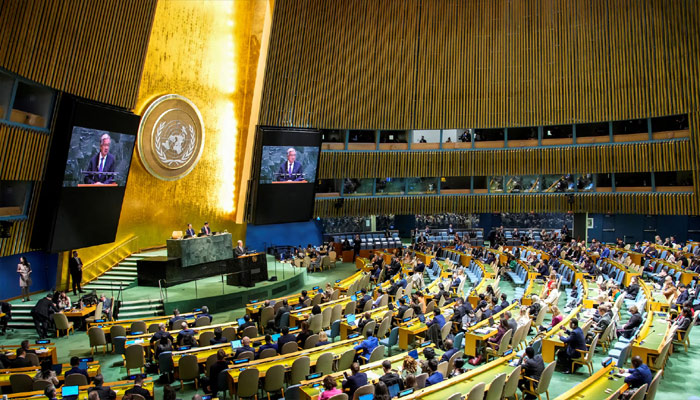
The United States and Iran traded sharp accusations at the United Nations.
After Tehran was appointed as one of the vice presidents of a key conference reviewing the nuclear Non-Proliferation Treaty (NPT).
The 11th NPT review conference, underway in New York, brings together member states to assess the implementation of the treaty, which came into force in 1970. Iran’s appointment to a leadership role—nominated by the Non-Aligned group—sparked immediate backlash from Washington.
US calls move ‘affront’
US representative Christopher Yeaw criticised Iran’s selection, calling it an “affront” to the NPT and questioning Tehran’s compliance record. He accused Iran of showing “contempt” for non-proliferation commitments and failing to fully cooperate with the International Atomic Energy Agency over concerns about its nuclear programme.
He described the decision as “beyond shameful” and damaging to the credibility of the conference.
Iran hits back
Iran swiftly rejected the criticism. Reza Najafi, Tehran’s envoy to the IAEA, called the US remarks “baseless and politically motivated.”
He countered by pointing to Washington’s own record, arguing that the US—historically the only country to have used nuclear weapons—lacks credibility to judge others on compliance.
Nuclear tensions in focus
The exchange comes amid heightened tensions over Iran’s nuclear ambitions. US President Donald Trump has reiterated that Iran must not acquire nuclear weapons, while Tehran maintains that its uranium enrichment programme is solely for peaceful purposes.
Western powers, however, remain sceptical, citing concerns that enrichment capabilities could be diverted toward weapons development. Although US intelligence and the IAEA have assessed that Iran halted its structured nuclear weapons programme in 2003, questions persist about its current activities.
Diplomatic efforts continue
Amid the standoff, Iranian sources indicated that Tehran has floated a proposal to de-escalate tensions, suggesting that discussions on its nuclear programme could be deferred until broader regional conflicts and maritime disputes in the Gulf are addressed.
Meanwhile, President Trump held discussions with senior national security officials, with the White House reiterating that US “red lines” on Iran’s nuclear ambitions remain firm.
The clash at the UN underscores the deep divisions between Washington and Tehran, even as global powers attempt to navigate diplomatic pathways to prevent further escalation.
Comments are closed.